Quotation form
Send an inquiry
Start with the basics. Our team can follow up for missing drawings, standards or packing details.
Submitted details are used only for quotation, technical review and project communication.

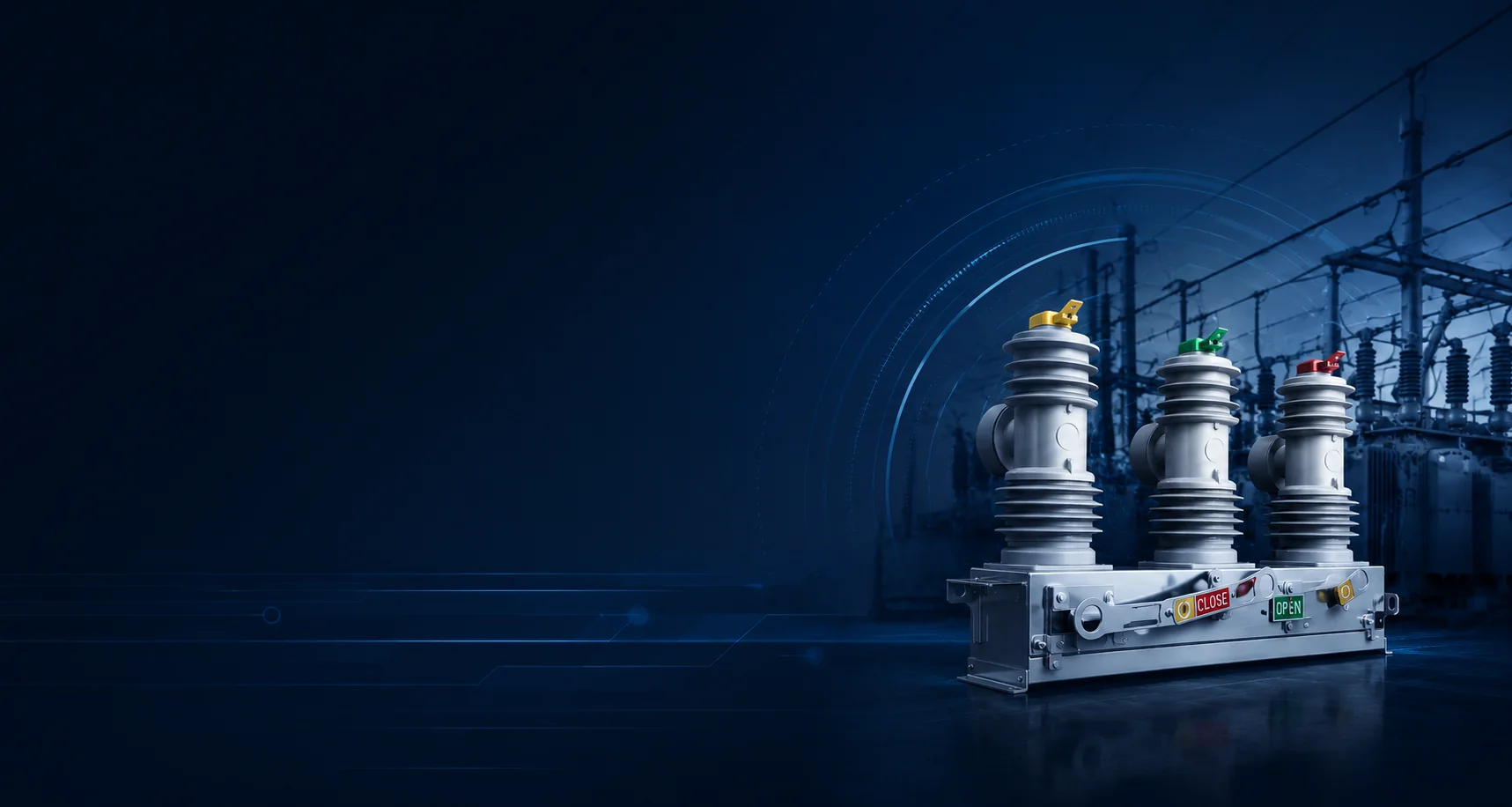
15-38 kV outdoor vacuum recloser for overhead distribution line protection, automatic reclosing, fault isolation and distribution automation projects. The recloser body fixes the interrupting duty; the controller layer fixes protection, communication and reclosing behavior.
The XIYA ACR guide lists DVZ15, DVZ27 and DVZ38 classes. Use the voltage class, rated current and short-circuit breaking current as the first selection layer, then confirm the controller and communication package.
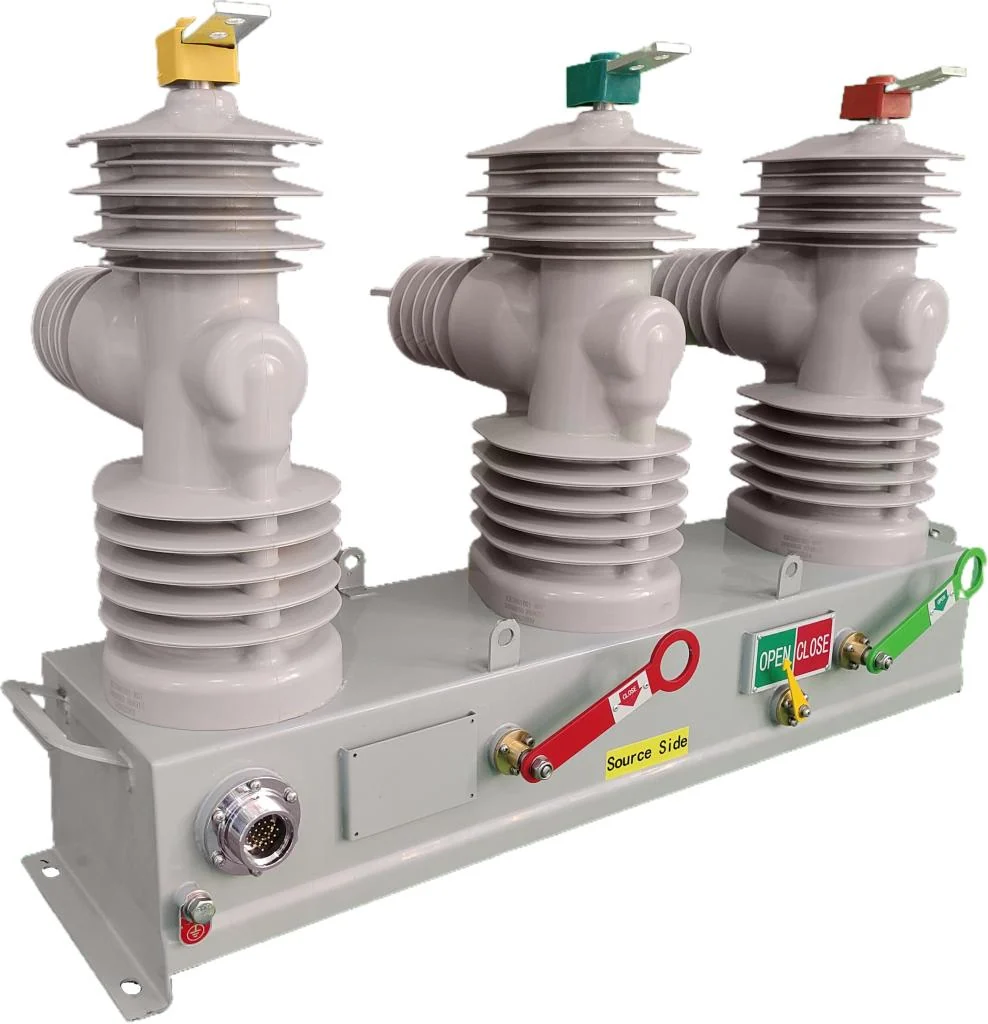
This class fits lower medium-voltage overhead distribution line and branch protection projects where the ACR must interrupt fault current and support automatic reclosing.
The 27 kV table includes N models and H models. The H option raises BIL, P.F. withstand, creepage, phase-earth clearance and weight.
The 38 kV class uses the higher insulation group in the XIYA table and is the top voltage class in the extracted product guide.
Confirm voltage class, current and breaking duty first. Then choose insulation group, CT or voltage sensing, mounting bracket, controller cabinet, communication protocol and destination standard.
The body interrupts fault current with vacuum interrupters. The controller layer decides protection curves, reclosing attempts, records and communication, so the two layers must be confirmed separately.
Vacuum interrupters and the actuator handle trip and close action for the three-phase line protection point.
Hydrophobic epoxy resin housings, creepage distance and phase clearances are selected by voltage class.
CT and voltage sensing options feed phase current, phase voltage and low-voltage supply values to the controller.
The visible red/green pointer and yellow hot-stick ring support field operation and state confirmation.
On this ACR page, the controller is a required protection layer rather than a loose add-on. It turns the vacuum switching body into an automatic recloser with fault detection, reclosing, lockout and distribution automation communication.
Controller documentation lists instantaneous over-current, time over-current, negative sequence, directional over-current, over-voltage, under-voltage, EF/SEF, cold load pickup and hot line tag.
Set reclosing times, dead time and curve behavior before quotation. The training material shows 1-4 reclose attempts and adjustable intervals in the software layer.
Controller documents list RS-232, RS-485, DNP3.0, Modbus, IEC 60870-5-101 and IEC 60870-5-104. The training file also references optional IEC61850, MQTT and multi-port configurations.
The ZW32 material lists SOE, fault record and normal operation record. Training slides show data viewing, parameter setting, forwarding settings and transmission test pages.
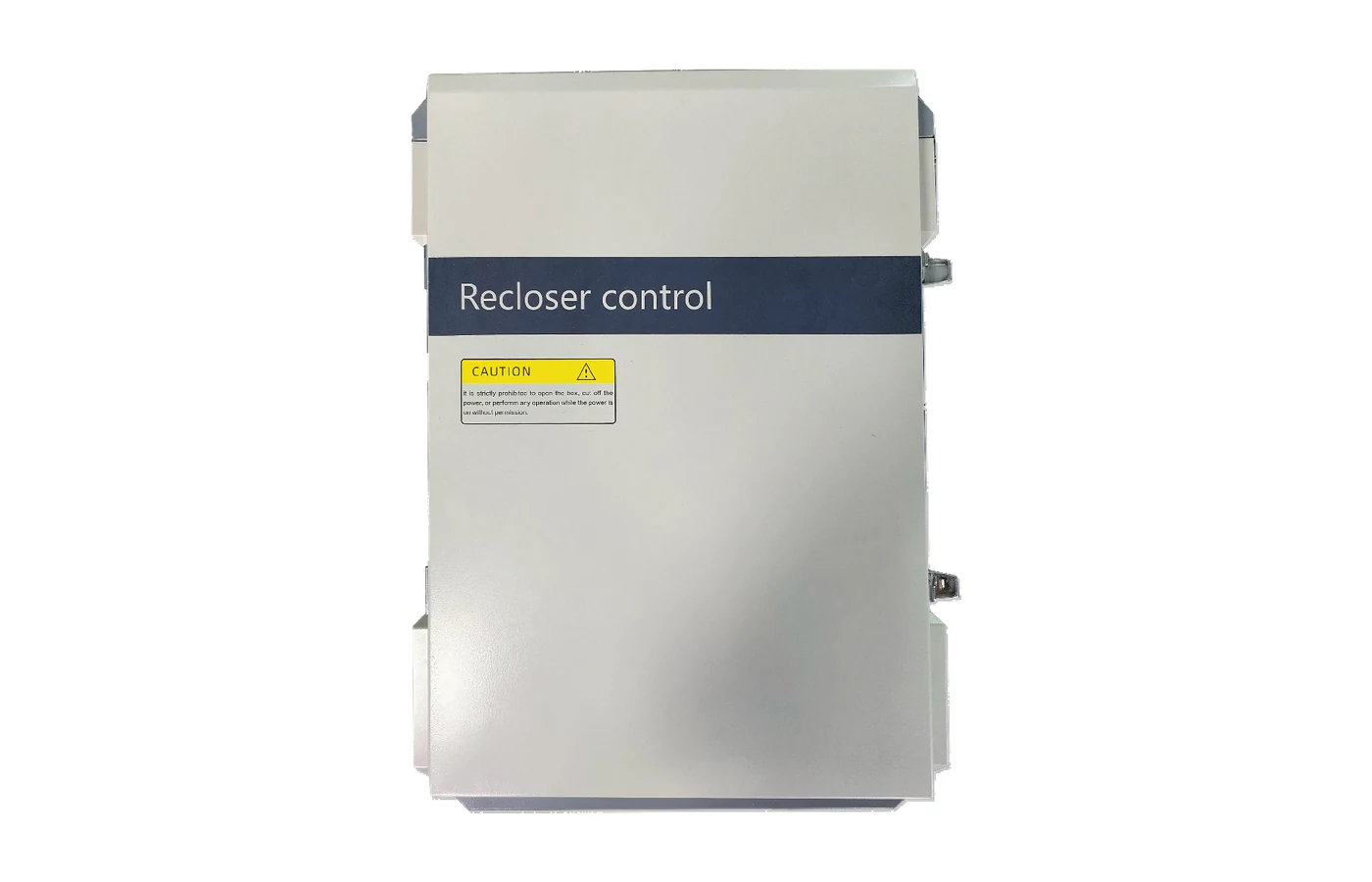
Use this cabinet layer for protection settings, trip and close command, event records, measurement data and communication interface. The cabinet is selected after the recloser body rating, CT or voltage sensing and utility protocol requirement are fixed.
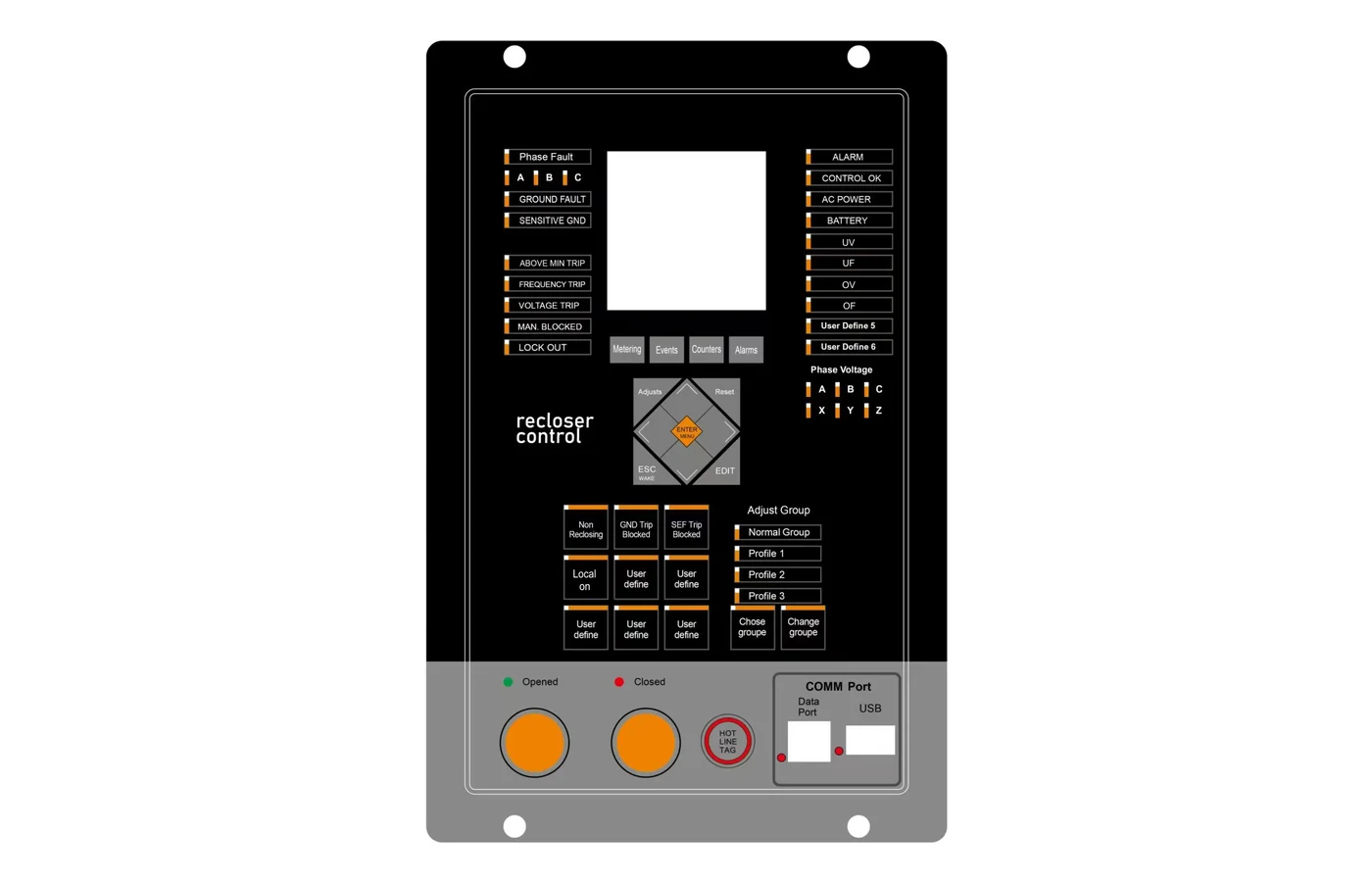
Confirm protection groups, local operation, hot-line tag, lockout behavior, metering, event and counter functions before production. DNP3.0, Modbus and IEC101/104 should be treated as project configuration items, not assumed by default.
The topology separates the power path, CT/voltage sensing, trip-close control and DA/SCADA communication. The fault marker belongs downstream of the ACR, because the recloser protects the selected line or branch point rather than representing a whole-network outage.
 Line sourceUpstream substation or overhead distribution line
ACR bodyVacuum interruption at the protection point
Downstream faultTrip, reclose, then lockout if fault remains
Protected loadsLateral, transformer or customer branch
Controller cabinetCT/VS sensing and trip-close command
DA / SCADAEvents, measurements and remote control
Line sourceUpstream substation or overhead distribution line
ACR bodyVacuum interruption at the protection point
Downstream faultTrip, reclose, then lockout if fault remains
Protected loadsLateral, transformer or customer branch
Controller cabinetCT/VS sensing and trip-close command
DA / SCADAEvents, measurements and remote control
Use the ACR where the line point needs vacuum interruption of fault current rather than only load switching.
The controller checks protection curves, dead time and reclose attempts. If the fault remains, the device locks out instead of repeatedly energizing the fault.
SCADA or DA integration depends on communication protocol, I/O, power supply, site signal quality and utility settings.
The selection notes below come from XIYA’s ACR guide and controller documentation. Ratings, protection functions and protocol options are kept in separate groups so buyers can verify the recloser body and controller package before RFQ. The page is reviewed by XIYA POWER sales engineering; for manufacturer background, see About XIYA POWER.
Documents the DVZ15, DVZ27 and DVZ38 rating table, recloser overview and mounting dimensions.
Documents protection, communication, pole, mechanism and accessory selection notes.
Documents HMI pages, software settings, forwarding, records and detailed protection function names.
The specification section uses the XIYA product guide table rather than mixing in broader unsupported ratings.
Protection curves, reclosing times, dead time, event records and protocol options come from controller documentation.
Mounting bracket, PT supply, surge arrester, terminals, voltage shields and aviation cable should be confirmed before order release.
It is a pole-mounted outdoor switching and protection device that interrupts line faults, recloses according to controller settings and locks out when the fault remains.
A load break switch is mainly for load current switching and sectionalizing. If the project needs fault-current interruption, protection curves and automatic reclosing, compare the ACR equipment type instead of the Pole-Mounted SF6 Load Break Switch (IACT).
A Smart Drop-Out Fuse keeps a fuse-point architecture and adds motorized operation or monitoring. A vacuum ACR is a three-phase line protection device with vacuum interrupters, controller protection logic and reclosing sequences.
The Cutout Single-Phase Recloser is for cutout-mounted single-phase branch points. The ACR page covers three-phase line-level vacuum interruption and controller-based distribution automation.
A User Boundary Switch is selected at customer demarcation points for user-side fault isolation. A three-phase ACR is used for broader line protection and automatic reclosing.
Send voltage class, rated current, breaking current, line diagram, fault duty, CT or voltage sensor requirement, controller protocol, SCADA interface, pole installation photo or drawing, quantity and destination standard.
USD 2,500-18,000 reference range is an indicative FOB equipment range for early budgeting. The final quote depends on rating class, controller package, quantity, destination and utility standard. Start with voltage class, rated current, short-circuit duty, line role, pole arrangement, CT/voltage sensing, communication protocol and destination standard. Datasheets, wiring drawings, controller settings and inspection documents can be reviewed during quotation. To compare adjacent Smart Grid devices, return to the Smart Grid equipment hub, review the Pole-Mounted SF6 Load Break Switch (IACT), compare User Boundary Switch or check Smart Drop-Out Fuse for fuse-point protection. For manufacturer background, see About XIYA POWER.