Quotation form
Send an inquiry
Start with the basics. Our team can follow up for missing drawings, standards or packing details.
Submitted details are used only for quotation, technical review and project communication.

Fuse disconnect switches place fuse protection at the same point as a switch or visible open point. Compare GWR high-voltage fuse type disconnects, RGW1 fuse-switch combinations, OFS-4A5 low tension fuse switches and low-voltage fused knife switches before sending an RFQ.
Start with voltage class and fuse package. GWR and RGW1 cover the high-voltage options. OFS-4A5 covers the supplied 500 V low tension row, while the fused knife switch needs order-specific ratings.
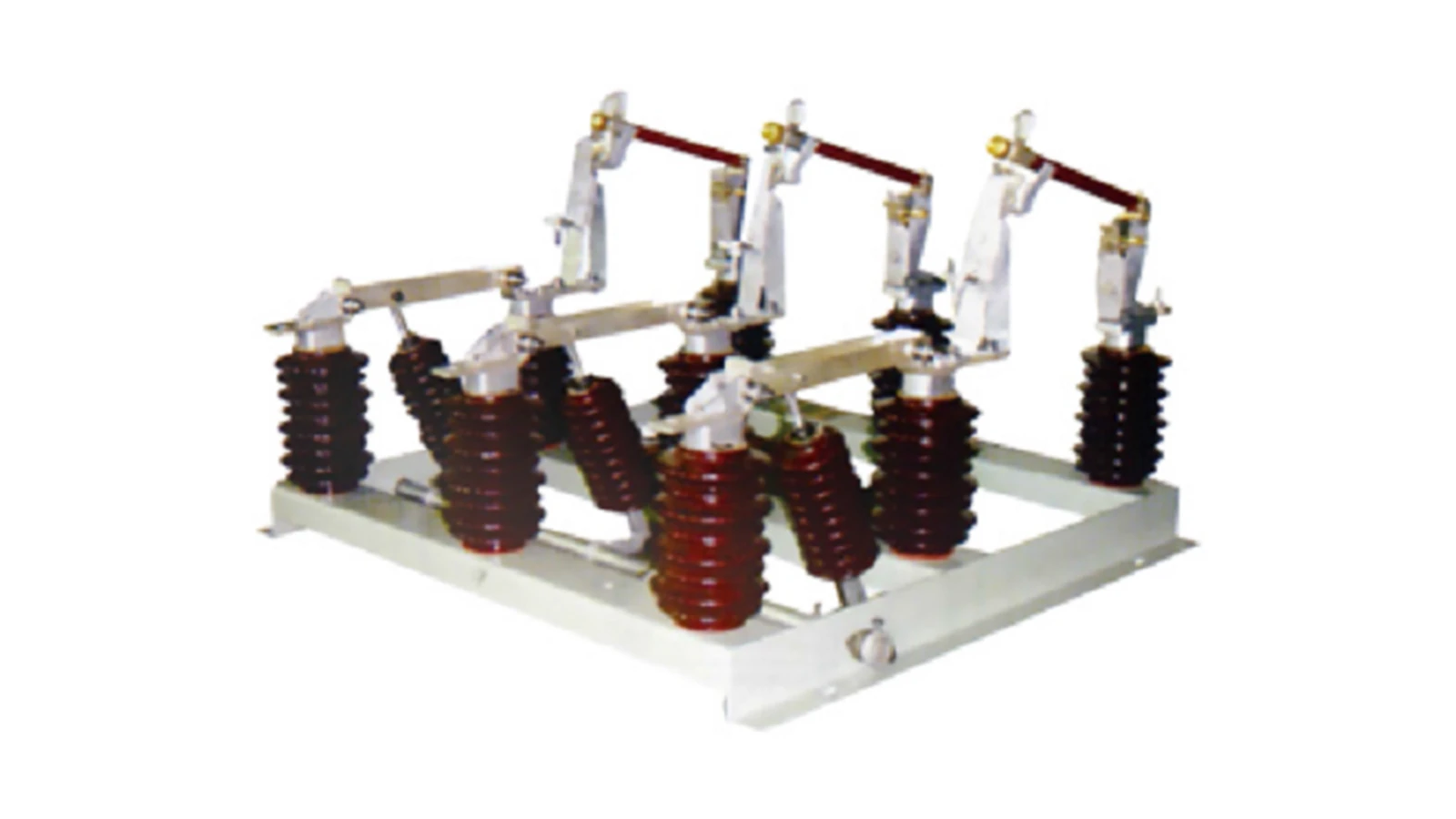
Outdoor AC high-voltage fuse type disconnect switch for distribution points that need fuse protection and visible isolation.
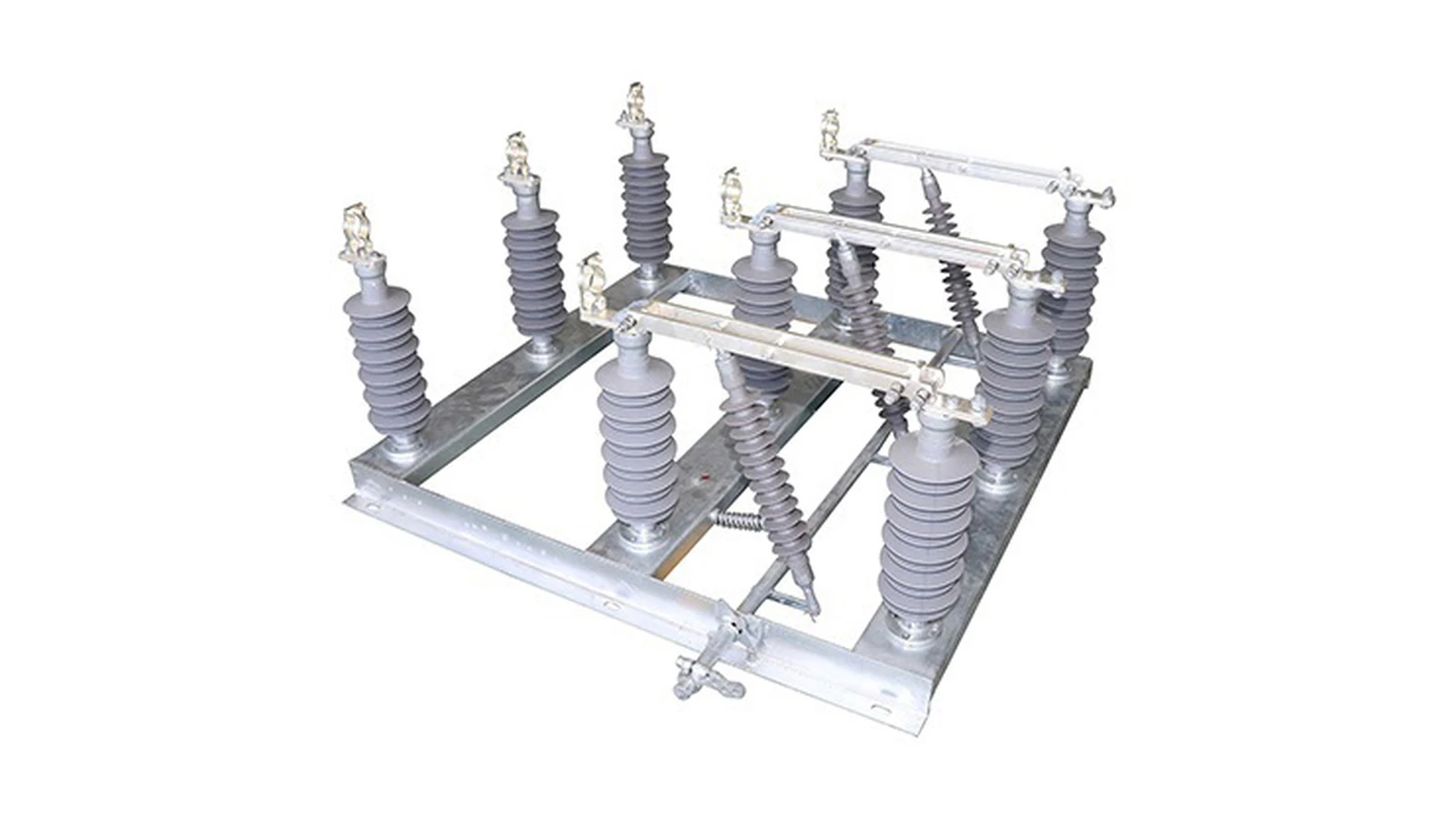
Outdoor AC fuse-switch combination using a disconnect blade, HRC fuse and operating mechanism in one assembly.
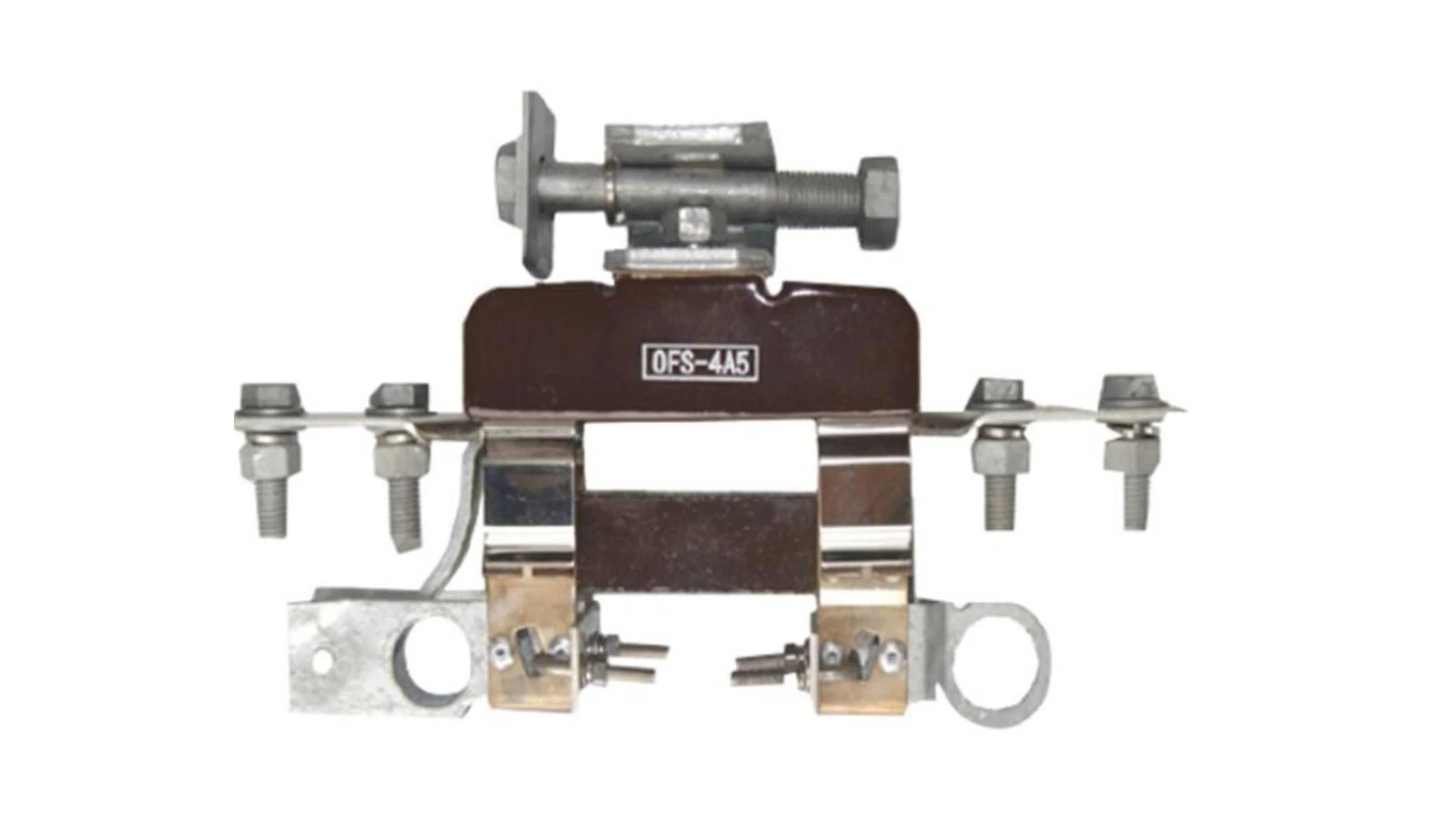
Single-pole low tension fuse switch for outdoor installation with HRC fuse links and hook-stick operation.
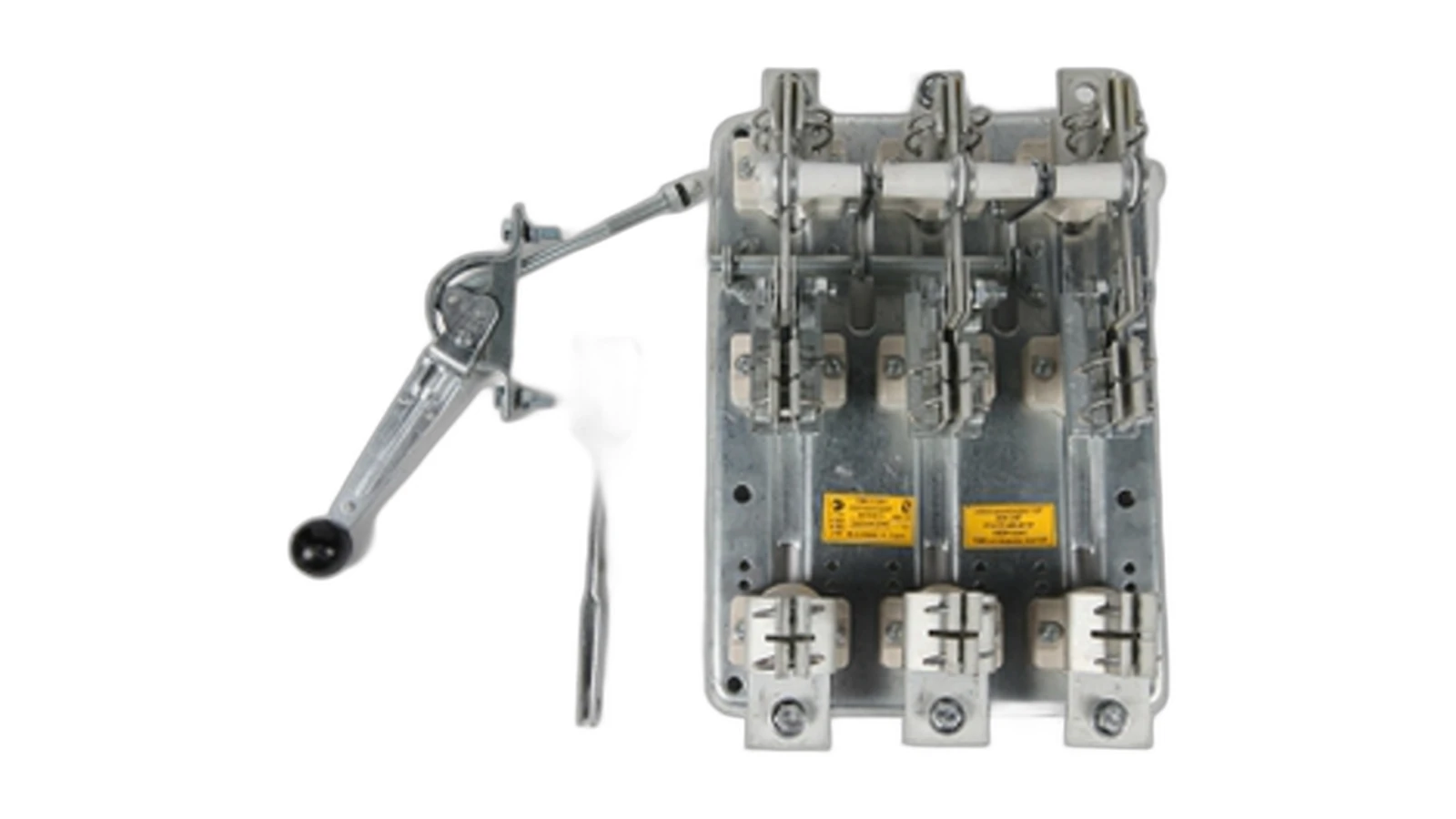
Low-voltage fused knife switch with a manual handle and visible fuse positions.
Use this selector to choose the right fuse disconnect configuration. Final model, drawing release and quotation still depend on the rating and mounting data sent with the RFQ.
Choose the equipment by protection point: outdoor HV feeder, fuse-switch combination duty, low tension HRC fuse switching or LV knife isolation.
Use this type when the fuse is part of the switching or isolation point. If the line only needs visible no-load isolation, compare the outdoor disconnect or air break switch pages instead.
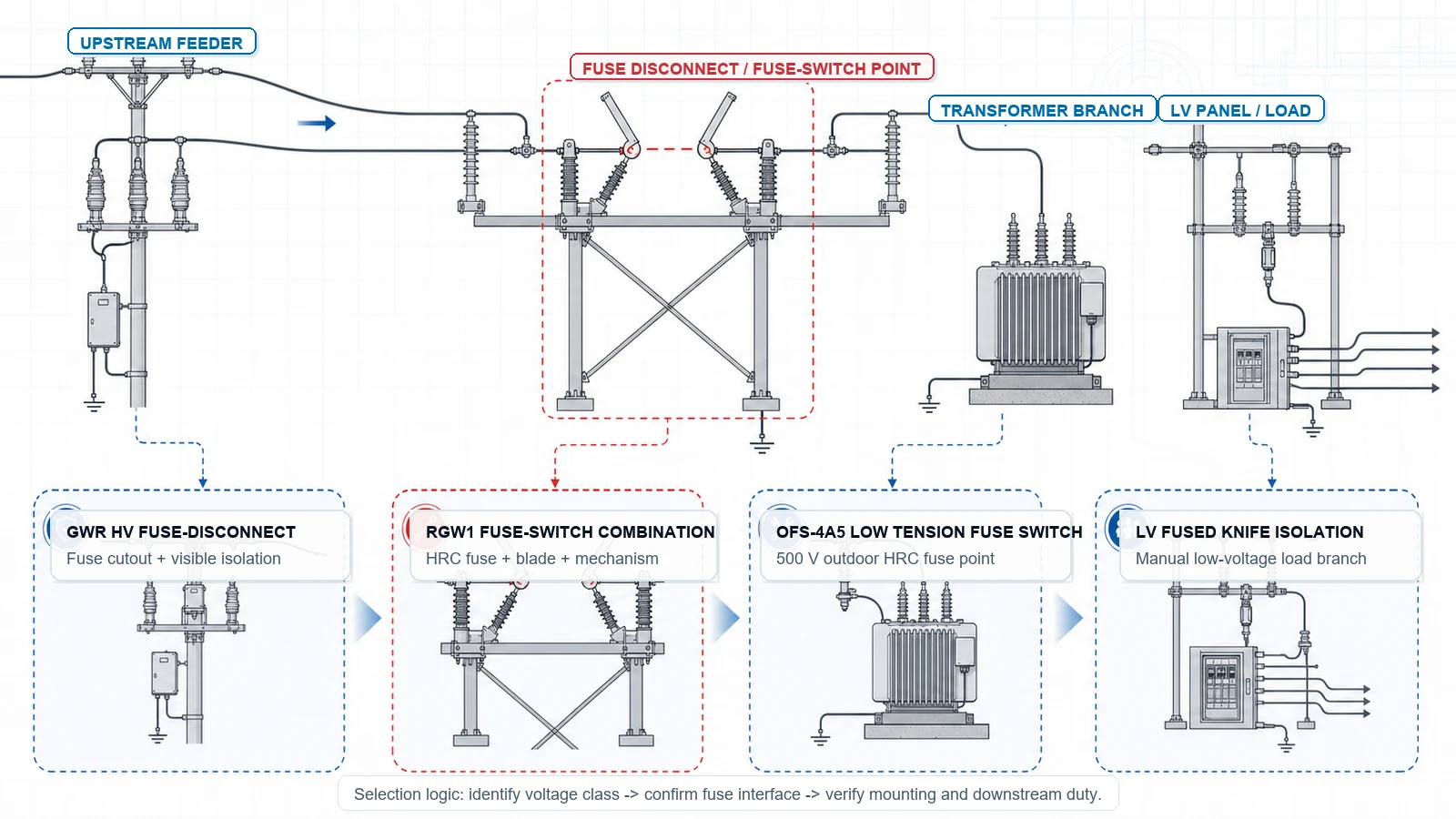
Use when the project needs 12 / 36 kV outdoor fuse-disconnect hardware with fuse cutout data and visible isolation structure.
Use when disconnect blade, HRC fuse and operating mechanism should be selected as one fuse-switch combination.
Use OFS-4A5 for 500 V single-pole outdoor HRC fuse switching. Use the fused knife switch type for manual low-voltage board isolation.
Use the matrix to choose the branch first: GWR/RGW1 for high-voltage fuse points, OFS-4A5 for 500 V outdoor low-tension HRC switching, or LV fused knife switch when ratings must come from the order file.
Once the voltage class is selected, check the fuse package, operating side and mounting interface against the drawing or panel layout.
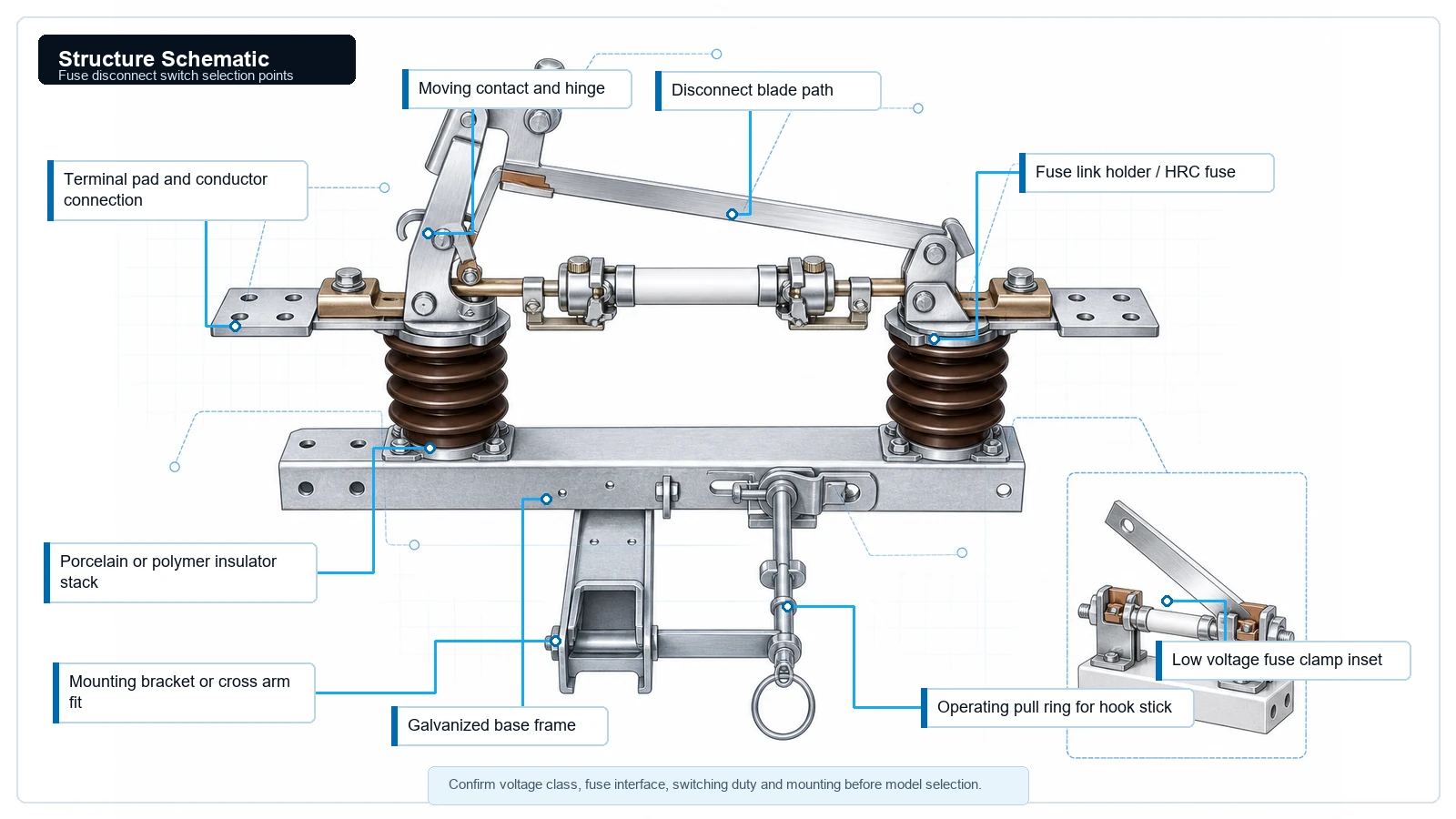
Check these four inputs before the model is released.
With the fuse package fixed, check voltage, current, breaking duty, fuse link and mounting arrangement against the physical structure.
GWR and RGW1 use 12 / 36 kV rating rows. OFS-4A5 lists 500 V, 400 A, 80 kA IC and 12 kV BIL. The fused knife switch photo needs order voltage and current data.
GWR is a fuse cutout configuration with visible isolation. RGW1 combines HRC fuse, disconnect blade and operating mechanism. OFS uses hook-stick operation and an HRC fuse clamp at the low tension point.
The review file should separate product identity, rating rows, structure checks and real project drawings. Technical scans can support the review, but they should not stand in for outline drawings; download fuse disconnect switch catalog PDFs before final model review.
Use clean product photos to separate GWR, RGW1, OFS-4A5 and fused knife switch structures before ratings are compared.
Use the 12 / 36 kV high-voltage rows, the 500 V low tension row or project data for the fused knife switch type.
Technical scans and sample photos are not drawings. If no clean English outline drawing exists, request a factory drawing before release.
Fuse cutout, HRC fuse, fuse link, knife contact, operating side, mounting layout and destination standard should be checked together.
Lock the electrical configuration first, then check fuse package, switching duty and mounting interface against the site drawing. For procurement review, check certificates, test reports and RFQ forms before release.
GWR/RGW1: 12 / 36 kV feeder points. OFS-4A5: 500 V outdoor LT. Fused knife: LV panel or board use.
Fuse cutout, HRC link, fuse base or knife contact decides the selected type.
Keep load break, loop, cable charging, IC and short-time withstand values in separate rows.
Cross-arm, terminal pad, busbar, incoming side and operating side must match the drawing.
Send the product type, system voltage, rated current, fuse type or fuse link, breaking duty, operating method, mounting layout, site conditions, quantity and destination standard.
Start with the system voltage and installation point. Use GWR or RGW1 for high-voltage outdoor distribution points, OFS-4A5 for 500 V low tension outdoor fuse switching, and the fused knife switch when the project needs low-voltage manual knife isolation.
No. The supplied folder provides product imagery only. Verify voltage, current, fuse type, mounting layout and operation side before treating it as a model-specific selection.
Use RGW1 when the project needs a fuse-switch combination with disconnect blade, HRC fuse and operating mechanism. Use GWR-12/36 when fuse type disconnect hardware and fuse cutout rating data are the better fit.
No. This selector is for fuse disconnect, fuse-switch combination and fused knife switch selection. Fault interruption, load switching and isolation duties must be checked against the exact model data.
Send mounting layout, operation side, pole or panel position, fuse package and terminal connection details when fixed dimensions or installation clearance matter.
Send voltage, rated current, fuse type, breaking duty, operating method, mounting drawing, quantity and destination standard. XIYA will return the suitable product type, drawing check and quotation scope.