Quotation form

Send an inquiry

Start with the basics. Our team can follow up for missing drawings, standards or packing details.

Contact Form Demo

Submitted details are used only for quotation, technical review and project communication.

Get Marketing Insights First
Subscribe to receive actionable strategies, growth tips, and industry insights delivered straight to your inbox.
Outdoor disconnect switch family

Outdoor Disconnect Switches for Visible Line Isolation

Compare seven outdoor disconnector structures for visible no-load isolation, neutral protection and outdoor line maintenance points. Use this page to choose the switch body, open-break geometry, mounting context and project data before model selection.

7 outdoor disconnector product typesSeries page separates outdoor disconnector structures from voltage and insulation variants.
10 kV-220 kV reference rangeHigh-voltage and medium-voltage isolation material stay in one selection flow.
No-load isolation firstAir break, fuse disconnect and bypass decisions stay in adjacent pages.
Product types

Outdoor Disconnect Switch Types for Visible Isolation.

Start from the physical switch structure: rotary, single-pole, neutral gap, double-break, non-fuse, three-phase or V-type. The details tile keeps the required project data beside the product options.
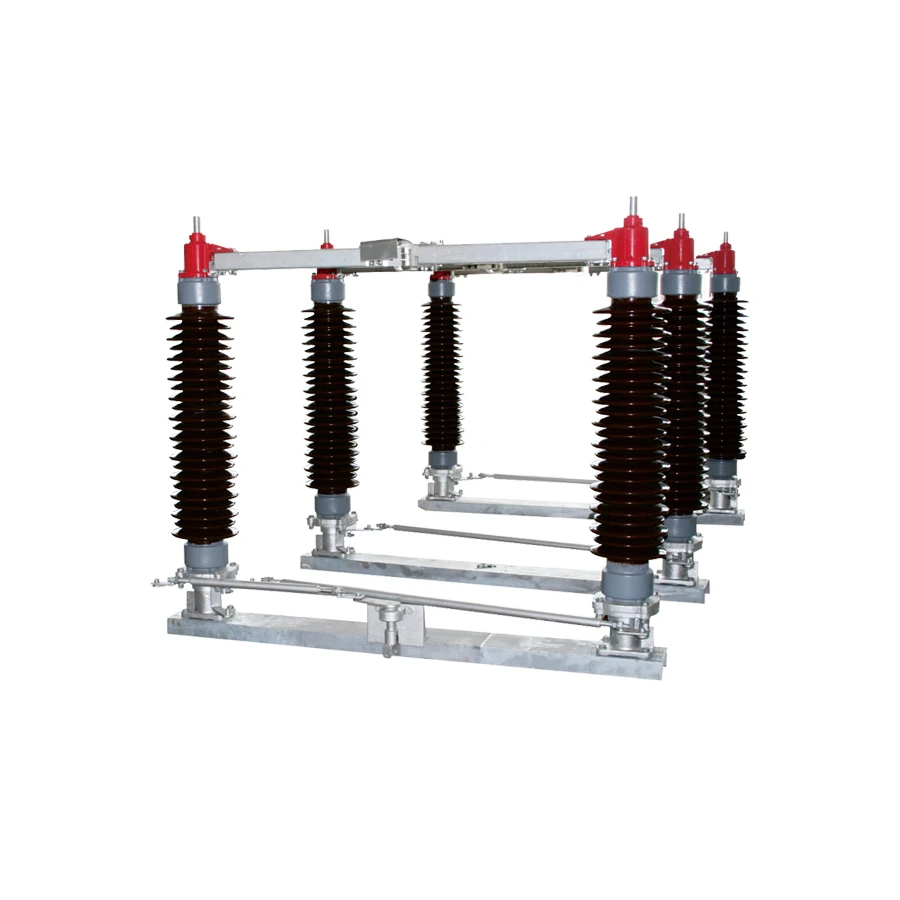
Double-column horizontal rotary disconnector product on a clean white background
ODS 01Product type

Double-column Horizontal Rotary Disconnector, 10 kV-220 kV

High-voltage outdoor visible isolation for substations, overhead line isolation points and maintenance switching positions.
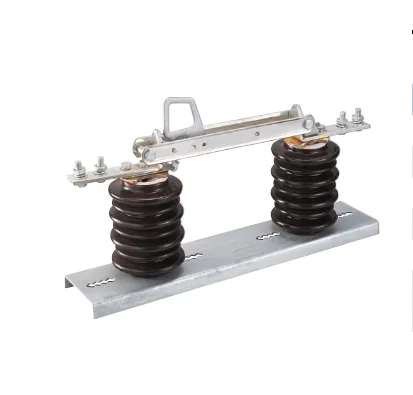
Medium voltage single-pole isolation switch with porcelain insulators on white background
ODS 02Product type

Medium Voltage Single-pole Isolation Switch

Medium-voltage single-pole isolation for overhead distribution lines where pole-by-pole switching and compact mounting matter.

Neutral disconnector with gap protection product on white background
ODS 03Product type

Neutral Disconnector with Gap Protection

Neutral-point isolation and gap-protection coordination for transformer neutral or special grounding arrangements.

Rotary double break isolator switch product on white background
ODS 04Product type

Rotary Double Break Isolator Switch

Outdoor double-break isolation where the buyer needs a rotating contact path and compact structure-based selection.

Single-phase non-fuse isolation switch product photo
ODS 05Product type

Single-phase Isolation Switch, Non-Fuse Type

Single-phase non-fuse isolation for overhead line points where protection is handled by another device.

Three-phase outdoor disconnecting switch product on white background
ODS 06Product type

Three-phase Disconnecting Switch

Three-phase outdoor disconnection for overhead line or structure-mounted isolation points.
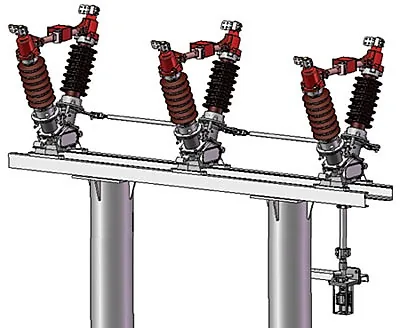
V-type horizontal break outdoor isolator with three-pole V structure on white background
ODS 07Product type

V-type Structure Horizontal Break Outdoor Isolator

V-type or horizontal-break outdoor isolation for high-voltage line and substation positions with structure-specific clearance needs.

Project details

Send the selected type with voltage, current and mounting drawing.

Pick a tile, then send voltage class, rated current, operating method, mounting drawing, quantity and destination standard.

Send details
Technical parameters

Double-column Horizontal Rotary Disconnector Technical Data

Outdoor AC high-voltage visible isolation family covering RGW1-24/36, GW4-12/15/24/40.5, GW4-72.5/126/145 and GW4-252 catalog references.

Catalog referenceRGW1-24/36; GW4-12/15/24/40.5; GW4-72.5/126/145; GW4-252

GW4 outdoor AC isolation switches are used on high-voltage lines, bus sections, circuit breakers and maintenance isolation points where visible no-load separation is required.

The structure is a double-column horizontal opening type. The main blade rotates about 90 degrees to open or close. Manual and electric operating mechanisms are both referenced in the catalog set.

Catalog coverage
RGW1-24/36; GW4-12/15/24/40.5; GW4-72.5/126/145; GW4-252
Rated voltage coverage
10 kV to 252 kV catalog references
Rated current coverage
400 A to 4000 A by model group; GW4-252 uses 1250 / 1600 / 2000 / 2500 A
Structure
Double-column horizontal rotary visible isolation
Operation
Manual CS11/CS14G/CS17/CS17G/CS9 or motor CJ6/CJ6B references
Grounding option
No grounding, single grounding or double grounding depending on model
Ambient conditions
<=3000 m altitude, -25 deg C to +40 deg C, wind <=35 m/s
Standards listed
IEC 62271-103, GB1985 and related standards

Ambient Conditions

ItemCatalog value
Altitude<= 3000 m
Ambient temperature-25 deg C to +40 deg C
Wind speed<= 35 m/s
Pollution degree<= III
Earthquake intensity< 8 degrees
Installation environmentFree from flammable, explosive and caustic gas
Standards listed by sourceIEC 62271-103, GB1985 and related standards

RGW1-24/36 Dimensions

Rated voltageABCDEF
24 kV305 mm635 mm860 mm500 mm1110 mm1165 mm
36 kV445 mm775 mm1000 mm600 mm1310 mm1365 mm

GW4-10/15/20 Reference Data

ItemUnit10 kV15 kV20 kV
Rated voltagekV101520
Maximum voltagekV1217.524
Rated currentA400 / 630 / 1250400 / 630 / 1250400 / 630 / 1250
Rated thermal stability current, 4 s effectivekA162031.5
Rated dynamic stability current, peakkA405080
Power frequency withstand voltage, to earthkV424245
Power frequency withstand voltage, fracturekV505055
Lightning impulse withstand voltage, to earthkV7575105
Lightning impulse withstand voltage, fracturekV8585125
Terminal rated static tensionN500500500

GW4-40.5 / GW4-40.5D Data

ModelRated voltageRated currentWithstand current4 s short-time withstand
GW4-40.5 / GW4-40.5D40.5 kV400 A50 kA20 kA
GW4-40.5 / GW4-40.5D40.5 kV630 A50 kA20 kA
GW4-40.5 / GW4-40.5D40.5 kV1000 A63 kA25 kA
GW4-40.5 / GW4-40.5D40.5 kV1250 A80 kA31.5 kA

GW4-40.5 / 126 / 252 Technical Data

ItemUnit40.5 kV126 kV252 kV
Rated voltagekV40.5126252
1 min power frequency withstand voltage, to earthkV95230460
1 min power frequency withstand voltage, interrupterkV115245460 + 145
Lightning impulse withstand voltage, to earthkV1855501050
Lightning impulse withstand voltage, interrupterkV2156301050 + 200
Rated frequencyHz505050
Rated current optionsA400 / 630 / 1000 / 1250 / 1600 / 2000 / 3150 / 4000400 / 630 / 1000 / 1250 / 1600 / 2000 / 3150 / 4000400 / 630 / 1000 / 1250 / 1600 / 2000 / 3150 / 4000
Rated short-time withstand current optionskA20 / 20 / 31.5 / 31.5 / 40 / 40 / 50 / 5020 / 20 / 31.5 / 31.5 / 40 / 40 / 50 / 5020 / 20 / 31.5 / 31.5 / 40 / 40 / 50 / 50
Rated peak withstand current optionskA40 / 50 / 80 / 80 / 100 / 100 / 125 / 12540 / 50 / 80 / 80 / 100 / 100 / 125 / 12540 / 50 / 80 / 80 / 100 / 100 / 125 / 125
Rated short-circuit duration, main blade / grounding blades4 / 24 / 24 / 2
Creepage distancemm1013-12561813-22483150-3906
Mechanical lifetimes200020002000
Production weight, no groundingkg360500800
Production weight, single groundingkg390560900
Production weight, double groundingkg4306201000

Rated Mechanical Terminal Load

ItemUnit40.5 kV126 / 252 kV
Horizontal and vertical loadN7501000
Horizontal loadN500750
Vertical forceN7501000

Operating Mechanisms

Mechanism typeConfigurationCatalog value
Manual actuatorNo groundingCS11(F)
Manual actuatorSingle groundingCS8-6D(F)
Manual actuatorDouble groundingMain blade CS14G(F); earth blade CS11(F)
Manual actuatorControl loop voltageAC220, DC110, DC220
Motor actuatorModelCJ6
Motor actuatorMotor voltageAC220, AC380, DC220
Motor actuatorControl loop voltageAC220, AC380, DC220
Motor actuatorClosing time6 +/- 1 s

GW4-72.5 / 126 / 145 Frame Dimensions

ItemL1L2L3L4L5L6
145 kV with earth250018354000160025001360
145 kV without earth250018354000160025001360
126 kV with earth200015353000130020001060
126 kV without earth200015353000130020001060
72.5 kV with earth17001120240010001700760
72.5 kV without earth17001120240010001700760

GW4-252 Technical Data

ItemUnitData
Rated voltagekV252
1 min power frequency withstand voltage, to earthkV460
1 min power frequency withstand voltage, fracturekV460 + 145
Lightning impulse withstand voltage, to earthkV1050
Lightning impulse withstand voltage, fracturekV1050 + 200
Rated frequencyHz50
Rated current optionsA1250 / 1600 / 2000 / 2500
Rated short-time withstand current optionskA31.5 / 40 / 50 / 50
Rated peak withstand current optionskA80 / 100 / 125 / 125
Rated short-time withstand current duration, main blade / grounding blades3 / 2
Horizontal longitudinal terminal loadN1500
Horizontal lateral terminal loadN1000
Vertical terminal forceN1250
Creepage distance optionsmm5040 / 6300 / 7812
Mechanical lifetimes10000

GW4-252 Operating Mechanisms

Mechanism typeItemCatalog value
Motor operating mechanismModelCJ6B
Motor operating mechanismMotor voltageAC380, AC220, DC220, DC110
Motor operating mechanismControlling circuit voltageAC220, AC380, DC220, DC110
Motor operating mechanismOpening and closing time8 +/- 1 s
Manual operating mechanismModelCS9, CS14G, CS17G
Manual operating mechanismElectromagnetic lock voltageAC220, DC220, DC110
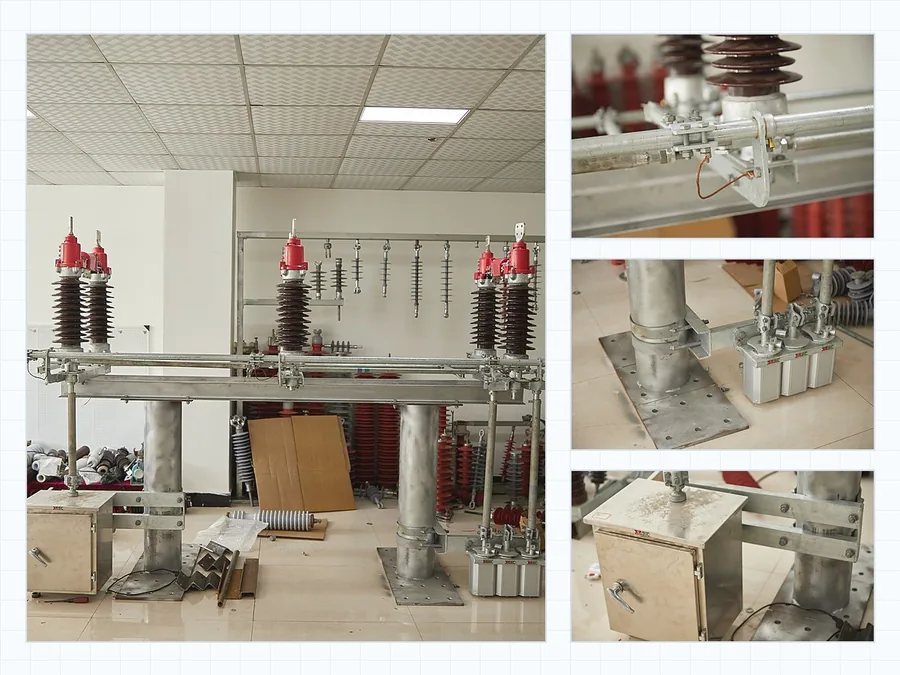
Double-column horizontal rotary disconnector product on a clean white background
Clean product image
Double-column horizontal rotary disconnector sample room overview
Sample-room structure overview
Double-column disconnector conductive bar and contact detail
Conductive bar and contact detail
Double-column disconnector drive base and operating mechanism detail
Drive base and mechanism detail
Catalog / sample basis

Processed from the first product source folder. Spec data is transcribed as text by model group, and drawing assets use cleaned English-only visuals.

GW4-12D/630 and GW4-40.5D outline dimensions
GW4-126/145 outline and mechanism detail drawings
GW4-72.5/126/145 frame dimensions
GW4-252 installation dimension diagram
Technical parameters

Medium Voltage Single-pole Isolation Switch Snapshot

Medium-voltage single-pole isolation for overhead distribution lines where pole-by-pole switching and compact mounting matter.

Catalog reference101 source photos across 15 kV epoxy, 15 kV polymeric, 15 kV porcelain and 33 kV porcelain groups.
Application role
Medium-voltage single-pole isolation for overhead distribution lines where pole-by-pole switching and compact mounting matter.
Structure signal
Single-pole switch body with porcelain, epoxy or polymeric insulation options and line-terminal hardware.
Rating signal
15 kV and 33 kV material groups, porcelain, epoxy or polymeric insulation, rated current and mounting pattern.
Project data boundary
Voltage class, insulation material, rated current, pole arrangement, bracket style, operation method, photos or drawings.
Catalog / sample basis

101 source photos across 15 kV epoxy, 15 kV polymeric, 15 kV porcelain and 33 kV porcelain groups. Modal data keeps structure, rating and project data signals visible while final selection stays tied to project drawings and confirmed standards.

Drawing status

No clean sample drawing is available for this product type. Confirm the final mounting drawing during technical review.

Technical parameters

Neutral Disconnector with Gap Protection Technical Data

Complete neutral point protective device data transcribed from the available BZJ-150 and BZJ-220 sample material.

Catalog referenceBZJ-150 / BZJ-220 Neutral Point Protective Device

The source describes a transformer neutral point protective device composed of a neutral point disconnector, discharge gap, zinc-oxide arrester and current transformer for discharging-current measurement.

The package is used when transformer neutral over-voltage protection and insulation coordination require a defined gap, arrester and isolation switch layout.

Catalog coverage
BZJ-150 / BZJ-220 neutral point complete protective device
Transformer rating class
150 kV class uses 170 kV transformer voltage; 220 kV class uses 252 kV transformer voltage
Disconnector families
GW13-150 / GW8-150 and GW13-126 / GW8-126
Arrester families
YH1.5W-96/260 and YH1.5W-144/320
Discharge gap
Rod clearance / spherical electrode
Current transformer
LMZW-10 current transformer option
Operating mechanism
CS17A manual mechanism or CJTKB motor mechanism
Support structure
T-shaped or n-shaped steel support, hot-galvanized structure

Operating and Installation Environment

ItemSource value
Ambient temperature-50 deg C to +50 deg C
AltitudeNo more than 2000 m; 2500 m or more can be adapted by requirement
Wind pressureNo more than 700 Pa, equivalent to 34 m/s wind speed
Seismic intensityNo more than 9 degrees
Ice coating thicknessNo more than 20 mm
Environment pollution classIII and IV
Installation siteFree of combustible, explosive hazard, chemical corrosion and violent movement

Transformer Neutral Point Withstand Voltage

ItemUnitBZJ-150BZJ-220
Rated voltage of transformerkV170252
8/20 us lightning impulse withstand voltagekV peak272400
1 min power frequency withstand voltagekV peak137200

Disconnector and Arrester Parameters

ItemUnitBZJ-150BZJ-220
Disconnector typeGW13-150 / GW8-150GW13-126 / GW8-126
Disconnector rated currentA630630
Resistance on main loop circuitmicro-ohm450450
Insulation distance across open contact after openingmm>=900>=1000
Operation mechanismCS17A manual or CJTKB motorCS17A manual or CJTKB motor
Zinc-oxide arrester typeYH1.5W-96/260YH1.5W-144/320
Arrester rated voltagekV r.m.s.96144
Continuously operating voltagekV r.m.s.77116
8/20 us lightning impulse current residual voltage, no more thankV260320
DC 1 mA reference voltage, no less thankV134205
2 ms square-wave flow capacityA400400

Discharging Clearance and Current Transformer

ItemUnitBZJ-150BZJ-220
Discharging clearance typeRod clearance, spherical electrodeRod clearance, spherical electrode
Power frequency dry discharging voltage +/-10%kV110164
Clearance electrode distance rangemm135-230250-320
Current transformer typeLMZW-10LMZW-10
Current variation ratio200/1, 200/5, 300/5, 400/5, 1000/5200/1, 200/5, 300/5, 400/5, 1000/5
Secondary protection level5P/30, 10P/10, 10P/205P/30, 10P/10, 10P/20
CapacityVA10, 20, 3010, 20, 30
Weight, no more thankg350400
Weight summarykgNo more than 350 / 400No more than 350 / 400

Main Feature Notes

FeatureSource note
Integrated setComplete protective device makes installation quick and convenient
Discharge clearanceIndependent stainless-steel component with adjustable clearance
Mounting preparationInstallation screw holes are prepared after disconnector and arrester types are confirmed
Steel supportHot-galvanized steel structure for solid support and corrosion prevention
Manual mechanismCS17A manual mechanism with stainless-steel cabinet; electromagnetic lock can be installed if required
Motor mechanismCJTKB motor mechanism with stainless-steel case, sealing and interlocking capability
Complete neutral disconnector and gap protection set on a clean white background
Complete neutral point protection set
Neutral point protection layout with disconnector arrester gap and counter assembly
Neutral protection layout with gap and counter
Catalog / sample basis

Processed from the neutral disconnector source folder. Public modal keeps the source values as text tables and uses cleaned drawings without Chinese labels or catalog screenshots.

Installation dimension drawing
Compact neutral layout drawing
Technical parameters

Rotary Double Break Isolator Switch Technical Data

GW7-126 and GW7-252 rotary double-break outdoor disconnect switch data transcribed from the available catalog pages.

Catalog referenceGW7-126 / GW7-252 catalog references

GW7-126 is described as a three-phase AC 50 Hz outdoor high-voltage disconnect switch for visible electrical isolation under no-current carrying conditions.

GW7-252 is a three-pole structure with frame, post insulators and conducting parts. The operating mechanism drives the revolving insulator about 71 degrees for opening and closing.

Catalog coverage
GW7-126 Outdoor Disconnect Switch and GW7-252 Outdoor HV Disconnect Switch
Rated voltage
126 kV / 252 kV
Rated current
GW7-126: 5000 A; GW7-252: 2000 / 2500 / 3150 / 4000 A
Rated peak withstand current
GW7-126: 160 kA; GW7-252: 125 / 160 kA
Rated short-time withstand current
GW7-126: 63 kA; GW7-252: 50 / 63 kA
Insulation level
1 min power-frequency withstand 460 kV; lightning impulse withstand 1050 kV references
Mechanism options
CJ6A / CSA and CJ6B motor / CS17 manual mechanism references
Environment
Altitude <=2000 m, -40 C to +40 C, wind <=34 m/s, ice <=10 mm
Standards reference
IEC 62271-102 and GB1985

GW7-126 Main Technical Parameters

No.ItemUnitData
1Rated voltagekV126
2Rated currentA5000
3Rated peak withstand currentkA160
43 s rated short-time withstand currentkA63
5Rated frequencyHz50
6Grounding switch rated peak withstand currentkA160
6Grounding switch 3 s short-time withstand currentkA63
7Terminal rated pull force, longitudinalN1500
7Terminal rated pull force, horizontalN1000
7Terminal rated pull force, verticalN1250
8Rated insulation level, 1 min power-frequency to earthkV460
8Rated insulation level, 1 min power-frequency fracturekV460+145
8Lightning impulse withstand voltage to earthkV1050
8Lightning impulse withstand voltage fracturekV1050+200
9Electromagnetic coupling rated inductive currentA80
9Electromagnetic coupling rated inductive voltagekV2
9Electrostatic coupling rated inductive currentA3
9Electrostatic coupling rated inductive voltagekV12
10Post insulator creeping ratio distance, III / IVmm/kV25 / 31
11Mechanical lifetimes3000
12Disconnecting switch circuit resistancemicro-ohm50
13Open and close bus conversion currentA1600
14Single pole weightkg1020

GW7-126 Working Environment

ItemSource value
AltitudeDoes not exceed 2000 m
Ambient temperature-40 deg C to +40 deg C
Maximum wind speed34 m/s
Anti-seismic abilityHorizontal acceleration 0.250 g; vertical acceleration 0.125 g
Ice thicknessNo more than 10 mm
Insulator pollution levelIII at 25 mm/kV; IV at 31 mm/kV
Installation siteFree from flammable, explosive, chemical corrosion and frequent severe vibration

GW7-252 Technical Specification

No.ItemUnitData
1Rated voltagekV252
2Rated currentA2000 / 2500 / 3150 / 4000
3Rated peak withstand currentkA125 / 160
4Rated short-time withstand current with earth switchkA50 / 63
5Rated short-time withstand times3
61 min P.F. withstand voltage to phasekV460
71 min P.F. withstand voltage across open contactkV460+145
8Rated lightning impulse withstand voltage to phasekV1050
9Rated lightning impulse withstand voltage across open contactkV1050+200
10Weight for single polekg500
11Mechanism operating timestimes3000
12Mechanism type, main bladeCJ6A
12Mechanism type, earth bladeCSA

GW7-252 Ambient Condition

ItemSource value
Altitude<=2000 m
Ambient temperature-40 deg C to +40 deg C
Wind speed<=34 m/s
Earthquake intensity<=8 degree
Ice coverage thickness<=10 mm
Pollution degreeI, II, III, IV
Applicable occasionFree from inflammables and frequent severe vibration

CJ6B motor / CS17 manual mechanism

ItemUnitCJ6B motorCS17 manual
Main axes output angledegree18090
Rated output torqueN.m1200
Motor powerW750
Motor voltageVAC380, DC220
Motor rated current / start currentA1.3 / 4
Motor rotate speedr/min1440
Control voltageVAC220, DC220
Anti-pollution degreeIP54IP54
Mechanical lifetimes1000010000
Contact of auxiliary switchpair10NO+10NC4NO+4NC, 8NO+8NC
Opening/closing times5 +/- 1 s30 s
Mechanism weightkg90

GW7-252 Structure and Operating Notes

AreaSource note
StructureThree-pole structure with frame, post insulators and conducting parts; each pole uses three post insulators
Rotating contact pathRevolving post is installed on the center axis base; the conductive knife is fixed on the center revolving post insulator
Operating mechanismMechanism drives the post insulator revolving 71 degrees to finish closing
InterlockInterlock is provided between disconnect switch and earth switch
Driving partSelf-lubricating composite axis cover; no added lubricating oil required
Main electric systemContact finger silver coating thickness >=30 um; hardness >=120 Vickers
Rotary double break isolator switch product on white background
Clean rotary double-break isolator product image
Catalog / sample basis

Processed from the rotary double-break source folder. The public modal keeps GW7-126 and GW7-252 values as text tables and displays only cropped, English-oriented technical visuals.

GW7-126 installation dimension drawing
GW7-252 model code and configuration key
Technical parameters

Single-phase Non-Fuse Isolation Switch Source Review

Source-limited modal for the non-fuse single-phase isolation switch photos. The folder confirms structure, not a standalone electrical rating table.

Catalog referenceSource photos only – no independent rating table in the source folder

The available source folder contains three product photos and no catalog parameter table. The modal therefore keeps to confirmed structure signals only.

Voltage and current selection should be routed under the single-pole isolation switch family, where the actual rating and insulation variant can be matched.

Confirmed source content
Three product photos showing the switch body and mounting structure
Function
Non-fuse blade isolation
Phase count
Single phase / single pole
Duty boundary
Visible no-load isolation only
Insulator body
Polymeric-looking outdoor insulator body in selected source photos
Contact structure
Blade contact with terminal hardware
Mounting interface
Vertical pole bracket or support strap
Operation
Hook-stick operation ring / manual operating eye
Rating table status
No independent rating table in the source folder

Source-Limited Technical Review

Source signalConfirmed valueSelection note
Product formSingle-phase non-fuse isolation switchDo not treat this as a standalone product page without a rating table
Switch bodyNon-fuse blade isolation with fixed bracket hardwareRoute fuse duty to Fuse Disconnect Switches instead
Phase configurationSingle phase / single poleUse for one-pole line isolation positions
Operation interfaceHook-stick operation ringManual operation confirmed by source photo
Mounting interfaceVertical pole bracket or support strapMounting drawing is still required for final selection
Rating tableNo independent rating table in the source folderRoute voltage and current selection under the single-pole isolation switch family
Single-phase non-fuse isolation switch selected clean product photo
Selected clean non-fuse isolation switch photo
Single-phase non-fuse isolation switch side structure and bracket detail
Side structure and pole-bracket detail
Catalog / sample basis

Processed from the three-photo source folder. Only confirmed structure signals are shown; no voltage or current rating is invented from photos.

Drawing status

No clean sample drawing is available for this product type. Confirm the final mounting drawing during technical review.

Technical parameters

Three-phase Disconnecting Switch Source Review

Source-limited modal for the three-phase disconnecting switch photos. The folder confirms product form and duty boundary, but does not include a standalone rating table or clean drawing sheet.

Catalog referenceThree-phase source folder – 9 images reviewed, no dedicated specification table found

The usable source assets show a three-pole outdoor disconnector / vertical isolator structure for grouped visible isolation points.

Fuse combination and arc/load-break images were excluded so this product stays inside the outdoor disconnect switch duty boundary.

Confirmed source content
Three selected clean product visuals from 9 reviewed source images
Product form
Three-phase outdoor disconnecting switch / vertical isolator structure
Phase count
Three phase / three pole assemblies
Duty boundary
Visible no-load isolation; do not present fuse or load-break duty from this folder
Main structure signal
Base frame, three pole assemblies, conductive blades and linkage hardware
Visual variants
Three-phase disconnector plus vertical type outdoor isolator references
Drawing status
No clean sample drawing found in this product folder
Rating table status
No independent voltage, current, BIL or short-time current table found

Source-Limited Technical Review

Source signalConfirmed valueSelection note
Product formThree-phase outdoor disconnector / vertical isolatorConfirm a model sheet before treating it as a model-specific offer
Pole arrangementThree visible pole assembliesSuitable for grouped three-phase isolation review
StructureBase frame, insulators, conductive blades and linkage hardwareFinal mounting structure still needs a project drawing
Visual sources selected8.jpg; SCDP2-Series-Isolating-Switch.png; Vertical Type Outdoor Isolator/3.pngUse these photos as the confirmed visual references
Excluded source groupOutdoor High-Voltage Fuse Combination DisconnectorFuse-combination duty belongs on the Fuse Disconnect Switches page
Excluded arc visualIA700_ALAC arc/load-break imageDo not mix arc-chute/load-break messaging into this disconnect switch product
Electrical ratingsNot available in current folderDo not infer voltage, current, BIL or short-time current from photos
Drawing packageNot available in current folderConfirm mounting drawing during technical review
Three-phase disconnecting switch product on a clean white background
Selected clean three-phase disconnecting switch photo
Vertical type outdoor isolator product on a clean white background
Vertical type outdoor isolator reference
Three-phase vertical outdoor isolator product reference on a clean white background
Large vertical isolator source photo
Catalog / sample basis

Processed from the three-phase disconnecting switch source folder. The modal only presents confirmed visual and structure signals; no voltage, current or drawing values are invented.

Drawing status

No clean sample drawing is available for this product type. Confirm the final mounting drawing during technical review.

Technical parameters

V-type Horizontal Break Outdoor Isolator Snapshot

V-type or horizontal-break outdoor isolation for high-voltage line and substation positions with structure-specific clearance needs.

Catalog reference9 source product and catalog images.
Application role
V-type or horizontal-break outdoor isolation for high-voltage line and substation positions with structure-specific clearance needs.
Structure signal
V-type outdoor isolator with angled support insulators, horizontal break movement and steel base structure.
Rating signal
Voltage class, current class, V-type geometry, grounding option, actuator type and structure clearance.
Project data boundary
Voltage class, current class, V-type structure drawing, grounding option, operation method, quantity and destination.
Catalog / sample basis

9 source product and catalog images. Modal data keeps structure, rating and project data signals visible while final selection stays tied to project drawings and confirmed standards.

Drawing status

No clean sample drawing is available for this product type. Confirm the final mounting drawing during technical review.

Application fit

Line, Substation and Neutral Isolation Applications.

Outdoor disconnect switch selection starts with the isolation point: overhead line, substation structure, neutral point or pole-mounted maintenance point. Use this section to avoid mixing no-load isolation with load switching or fuse protection.

Engineering topology

Read the isolation point before choosing the switch body.

The topology board supports visual scanning. Final selection still follows voltage, current, mounting drawing and duty boundary.
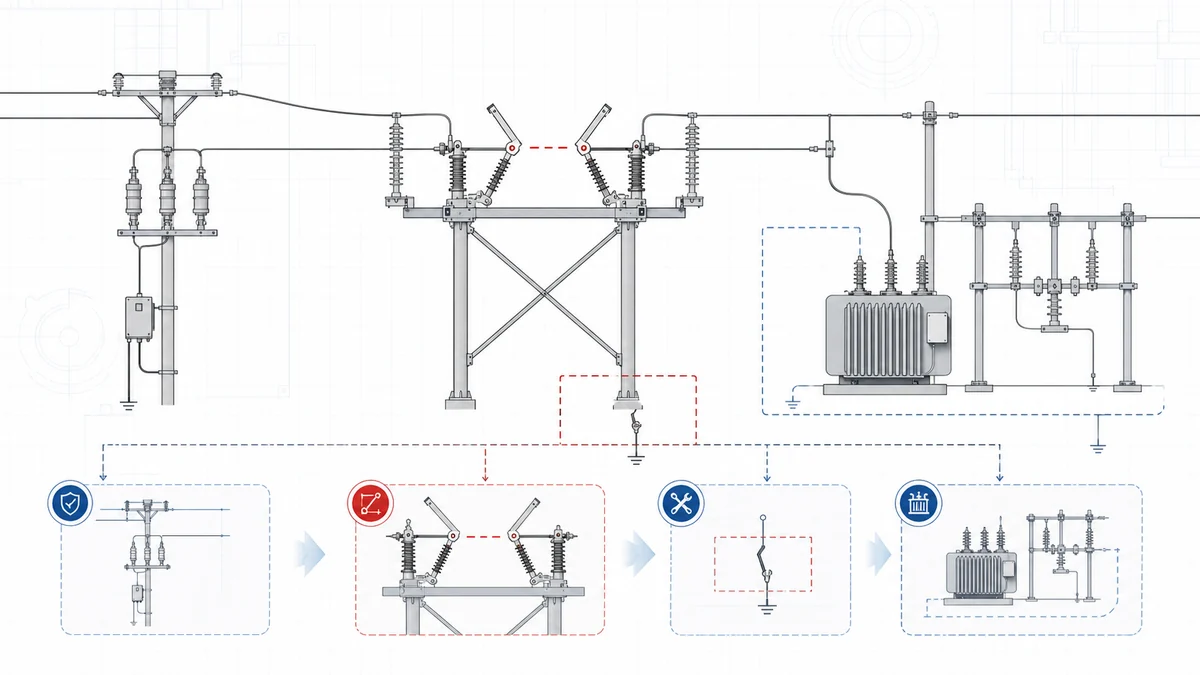
Engineering topology diagram for outdoor disconnect switch isolation point selection
Line isolation

Visible open point for maintenance

Use outdoor disconnect switches after load or fault current has been removed by upstream switching or protection equipment.

Substation isolation

Structure and clearance driven selection

Double-column, rotary double-break and V-type structures are selected by voltage level, open distance, phase spacing and support structure.

Neutral protection

Neutral point and gap coordination

Neutral disconnector with gap protection needs transformer neutral scheme, gap or arrester arrangement and drawing review before model confirmation.

Selection matrix

Compare Structures, Ratings and Project Data.

Compressed engineering view: application point, structure signal and required project data. Product photos stay in the section above.

Product type
Application point
Structure signal
Project data
Double-column rotary10 kV-220 kV
HV substation/Visible gap/Line maintenance
Double-column/Horizontal rotary/Grounding blade
Voltage/Current/Grounding/Drawing
Single-pole isolation15 kV / 33 kV
Distribution pole/Pole-by-pole/Compact mount
Single pole/Porcelain / epoxy/Bracket style
Voltage/Insulator/Current/Bracket
Neutral gap protectionNeutral point
Transformer neutral/Gap protection/Grounding scheme
Gap layout/Arrester option/Support height
Neutral scheme/Gap/Drawing/Height
Rotary double breakDouble break
Substation bay/Double open point/Compact layout
Two breaks/Rotary contact/Operating side
Voltage/Current/Contact path/Base
Single-phase non-fuseNon-fuse
Single phase/No fuse/Line isolation
Blade contact/Pole bracket/Manual operation
Voltage/Current/Bracket/Quantity
Three-phase disconnectingThree phase
Grouped operation/Overhead line/Shared linkage
Phase spacing/Linkage/Arc option
Voltage/Current/Spacing/Mechanism
V-type horizontal breakHV clearance
HV line/Clearance driven/Substation structure
V-type/Horizontal break/Grounding option
Voltage/Current/Clearance/Drawing
Structure

Visible Isolation Structure, Operation and Mounting Inputs.

Confirm drawing, operation and mounting signals before model confirmation.

Outdoor disconnect switch structure details for visible isolation review

Structure inputs

Four checks before model confirmation.

Visible gapOpen distance, break count, contact path.
Support systemInsulator type, base frame, terminal load.
Operating packageManual, motor, linkage, handle side.
Mounting fitPole, steel frame, phase spacing, grounding.
Variant handling

Voltage Ratings, Insulator Materials and Duty Boundaries.

After the switch structure is clear, confirm the rating, insulation material and duty boundary that change the final configuration.

Rating options

Choose voltage class and insulator material inside the same switch family.

15 kV, 33 kV, epoxy, polymeric and porcelain options stay under the single-pole isolation switch so the project data compares equal structures first.

Duty boundary

Separate visible isolation from fuse or load-switching duty.

Use outdoor disconnect switches for no-load isolation. Add fuse-combination or load-break requirements only when protection or current interruption is required.
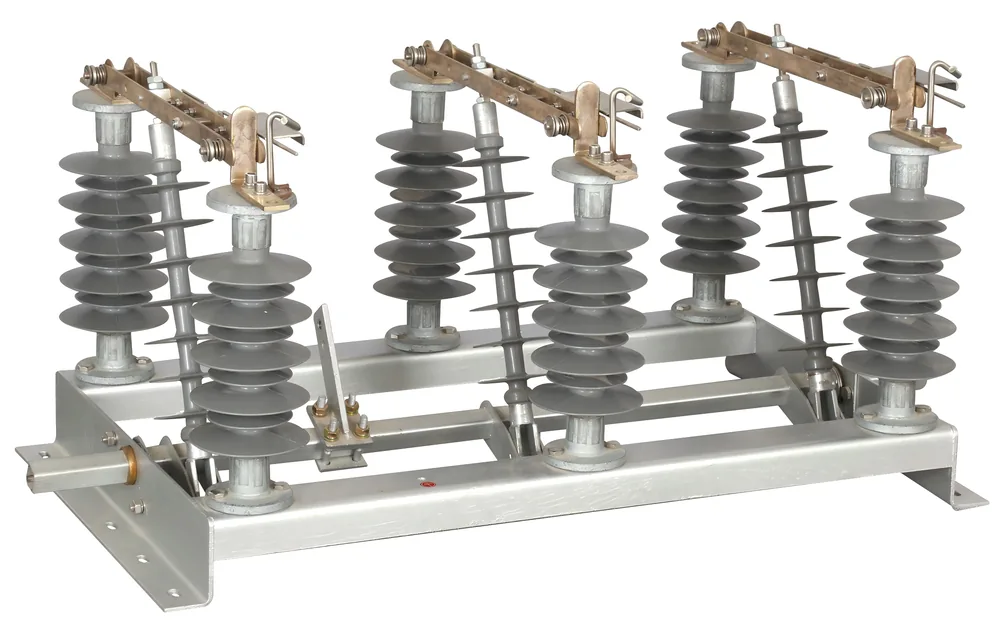
Medium voltage single-pole isolation switch with porcelain insulators on white background
Three-phase outdoor disconnecting switch product on white background
V-type horizontal break outdoor isolator with three-pole V structure on white background
Review files

Project Review Files for Outdoor Disconnect Switches.

A complete review package lets engineering confirm structure, ratings, operating side and mounting clearance from more than product photos alone.

Double-column horizontal rotary disconnector product on a clean white background
Engineering topology diagram for outdoor disconnect switch isolation point selection
Three-phase outdoor disconnecting switch product on white background
Product identity

Confirm the exact switch family

Use product photos to identify double-column, single-pole, neutral, double-break, three-phase or V-type structures.

Rating evidence

Match voltage and current to catalog data

Send rated voltage, rated current, insulation level and insulator material so the selected model follows the right rating group.

Mounting drawing

Show the installation point

Pole bracket, steel frame, phase spacing, terminal direction and operating side can change the final configuration.

Duty boundary

Flag fuse or load switching early

If protection or load-current interruption is required, include that duty before the disconnect switch model is confirmed.

Technical review

Selection Checklist: Voltage, Current, Operation and Drawings.

Send the selected structure with project ratings and mounting details so XIYA can confirm a buildable configuration before model recommendation.

Isolation dutyVisible no-load isolation

Use this series when the line needs a visible open point after switching or protection equipment has cleared current.

Review roleStructure and duty check

Product type, visible isolation role and duty boundary are checked before recommending a model.

Review packagePhotos, ratings, drawings

Photos identify the structure. Rating data and installation drawings narrow the final configuration.

Project dataSelected type plus site conditions

Use the final form to send voltage, current, operation method and mounting conditions.

Product typeSelected tile or matrix row.
Voltage classSystem voltage and insulation level.
Rated currentContinuous current requirement.
Line roleLine, substation, neutral or pole-mounted point.
Operation methodManual, linkage or motor mechanism.
Mounting drawingPole, frame, phase spacing and terminal direction.
Grounding optionGrounding blade or neutral protection requirement.
Quantity and standardQuantity, destination and utility requirement.
FAQ

Outdoor Disconnect Switch Selection FAQ.

How should I choose an outdoor disconnect switch type?

Start with the isolation point and switch structure. Then confirm voltage class, rated current, insulation material, operating method, mounting pattern and drawing inputs.

Are 15 kV and 33 kV single-pole options separate switch types?

No. They are rating and insulation variants under the Medium Voltage Single-pole Isolation Switch. Select the structure first, then choose voltage class and insulator material.

When should fuse-combination equipment be specified separately?

Specify it separately when fuse protection and visible isolation are required at the same point. For simple no-load isolation, keep the selection under outdoor disconnect switches.

What information is needed before model confirmation?

Send voltage class, rated current, line role, no-load isolation duty, phase layout, insulation material, grounding option, operating mechanism, mounting drawing, quantity and destination standard.

Can outdoor disconnect switches interrupt load current?

Outdoor disconnect switches are normally selected for visible no-load isolation. If the line point needs load current switching, compare outdoor air break switches or load break switch equipment before selecting the disconnect switch.

Request a Quote With Isolation Point Details.

Send the selected product type with voltage class, rated current, no-load isolation role, phase count, insulator material, grounding option, operating method, mounting drawing, quantity and destination standard. For adjacent duties, compare the Distribution Switching Disconnect switches, Outdoor Air Break Switches or Fuse Disconnect Switches before sending the final request.

Request Outdoor Disconnect Quote