Quotation form
Send an inquiry
Start with the basics. Our team can follow up for missing drawings, standards or packing details.
Submitted details are used only for quotation, technical review and project communication.

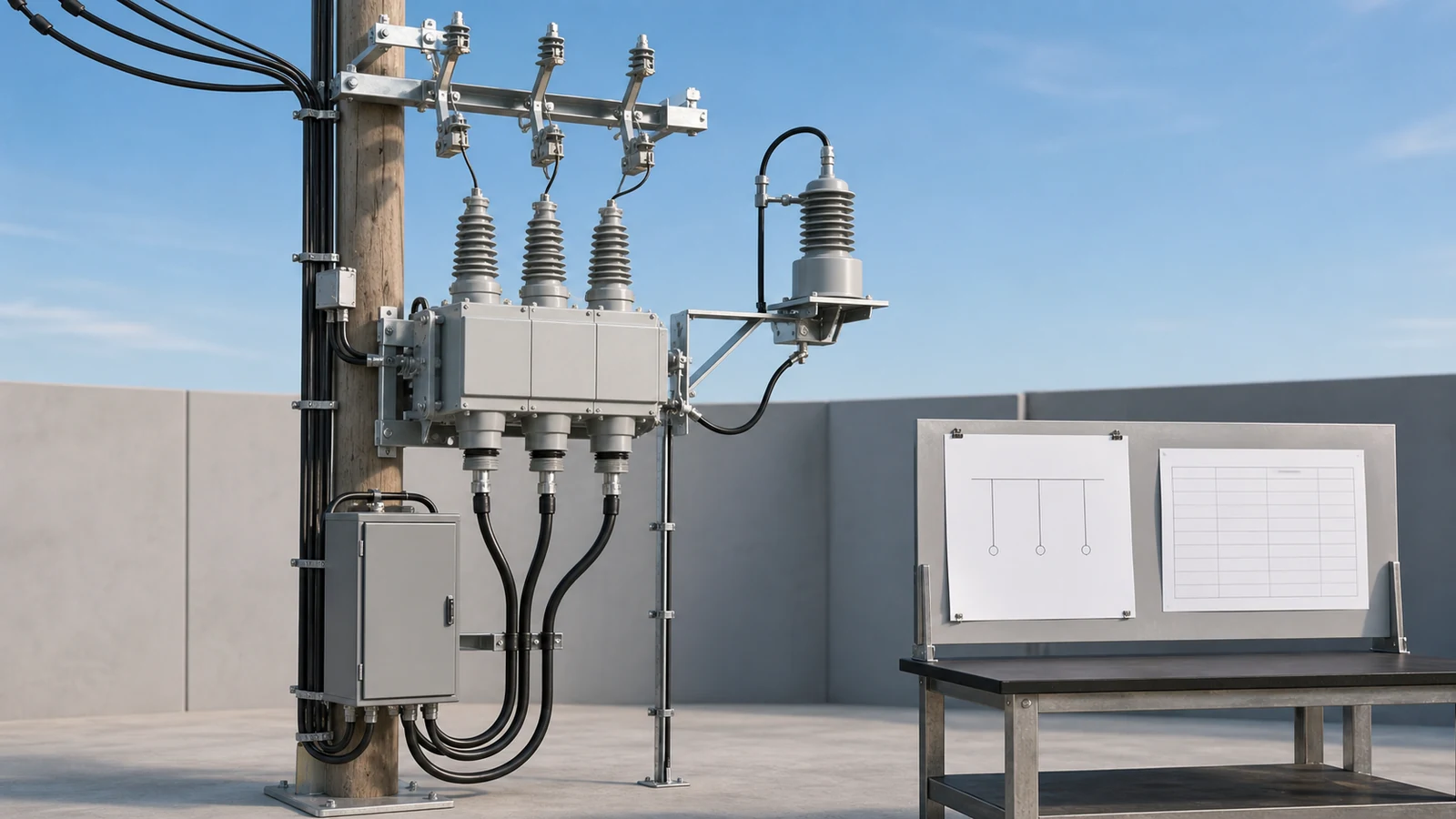
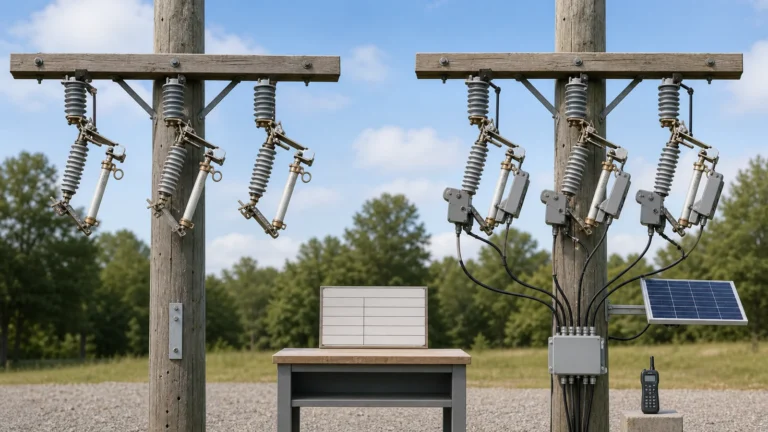
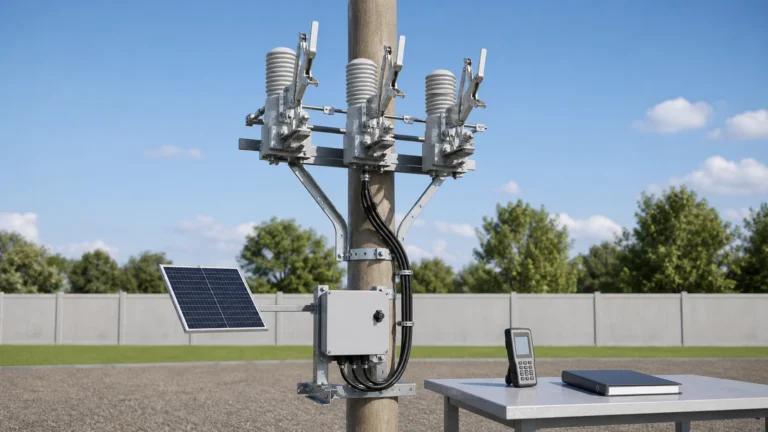
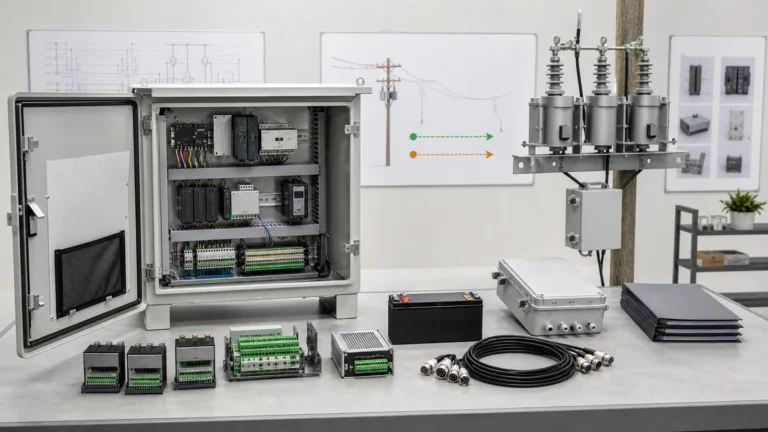
All images are generated illustrative technical visualizations, not XIYA POWER factory, quotation, order, design, selection, installation, inspection, test, commissioning, maintenance, failure, outage, or field photographs.
User boundary switch selection should remain on hold until the boundary role, breaker duty, protection zone, sensing, authority, PT supply, communication, and revision-matched evidence agree. A model name, controller, or physical connection point cannot close those decisions alone.
The XIYA POWER user boundary switch page screens representative breaker and controller packages. The Smart Grid equipment hub confirms their customer-boundary role. Neither page replaces project inputs or approval evidence.
Use this selection matrix before comparing offers:
| Decision | Required input | Selection decision | Release evidence | Hold condition |
|---|---|---|---|---|
| Application | Approved SLD, connection point, line role, user-side fault scenarios | Boundary-breaker role and location | Signed SLD and responsibility basis | Role or point is provisional |
| Breaker duty | Voltage, frequency, load, fault study, insulation, environment | Ratings, terminals, mechanism, optional isolator | Study-linked schedule and manufacturer data | Any duty basis is missing |
| Protection | Neutral grounding, zone, coordination, trip and lockout philosophy | Required functions and controller inputs | Protection study and approved sequence | Settings or authority are assumed |
| Sensing | Phase CT and ZCT ratio, class, burden, polarity, grounding, mapping | Selected sensing package | Controlled CT/ZCT schedule | Interface data is incomplete |
| Responsibility | Connection, ownership, operation, metering, isolation, restoration | Named owner for each boundary | Agreement and authority matrix | A device label substitutes for agreement |
| PT power | Ratio, secondary voltage, burden, accuracy, fusing, grounding, loads | PT and controller supply package | PT schedule, load calculation, wiring | Range or load allocation is open |
| Communication | Interface, protocol, bearer, gateway, points, time, access | Communication and handover package | Approved architecture and point list | Only RS485 or DTU is stated |
| Evidence | Datasheet, drawings, controller notes, test references, deviations | Traceable offered configuration | Approved revision register | Files describe different revisions |
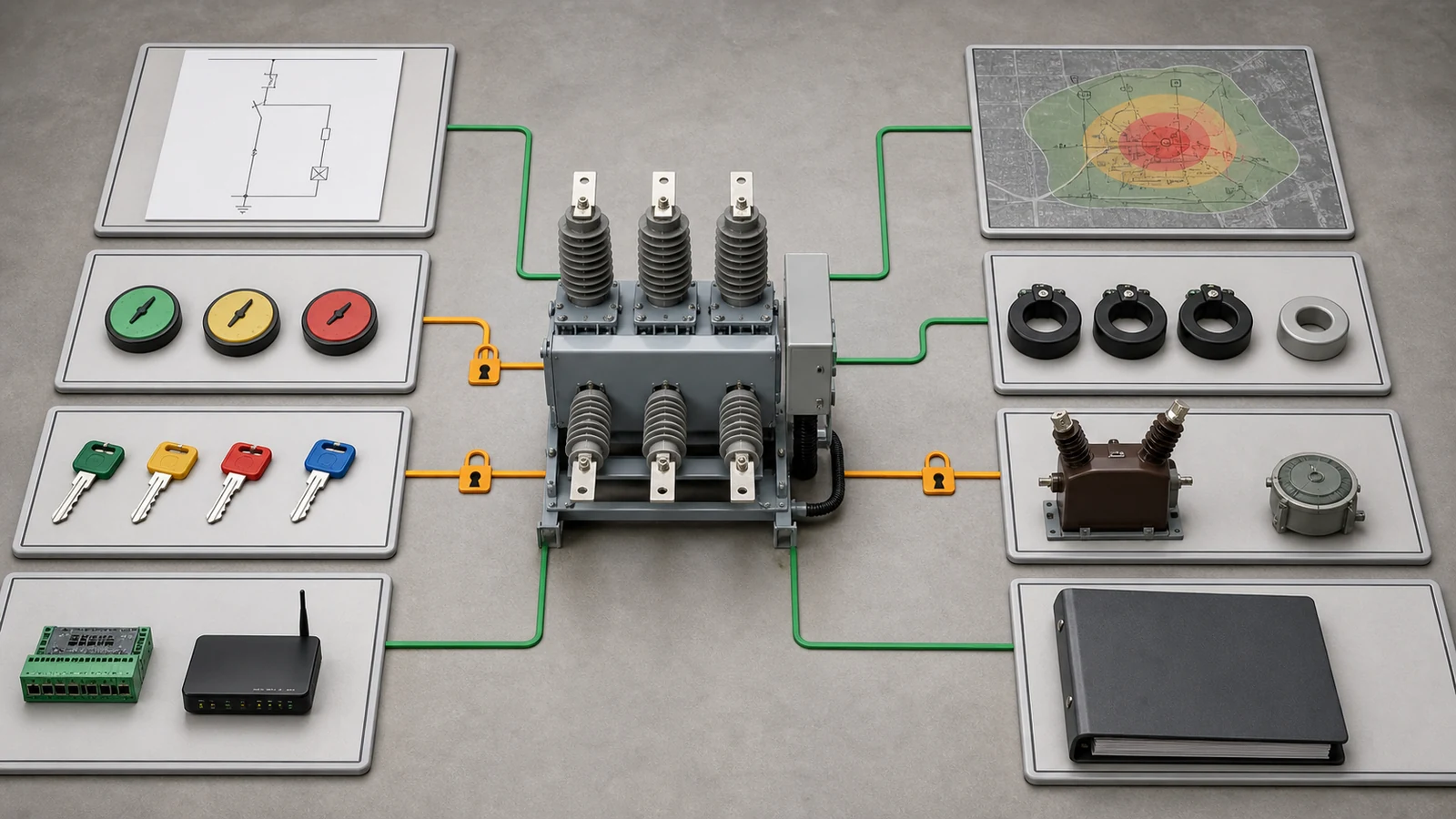
The matrix keeps primary duty, protection logic, legal or operational responsibility, and digital interfaces separate. An offer is comparable only when every row has the same project basis.
Give every row an owner, due date, revision, and state. Use supported, deviation, not applicable, or hold only when a referenced document justifies that state. A blank cell is not an approval.
Separate family screening from model release. Family data can remove unsuitable options, while the release schedule must identify the exact breaker, sensors, PT, controller, accessories, firmware, and drawings offered.
Start after the existing user boundary switch primer has separated the physical connection, protection zone, ownership, operating authority, metering, and safe-isolation boundaries. This guide converts those established boundaries into project-selection inputs.
Freeze voltage, frequency, continuous current, load profile, short-circuit duty, insulation basis, altitude, temperature, pollution, wind, ice, pole layout, and terminal arrangement. The fault study should identify the quantities needed by the adopted breaker-rating method. Do not infer making duty or short-time withstand from symmetrical fault current alone.
The live product page publishes a 12 kV screening series with 400 A or 630 A normal current. It lists 12.5 kA, 16 kA, or 20 kA breaking classes, plus 42 kV power-frequency and 75 kV impulse withstand entries. These are screening values, not a selected offer.
The public IEC 62271-100:2021 page covers three-phase AC circuit-breakers installed indoors or outdoors, at 50 Hz or 60 Hz, on systems above 1,000 V. Its scope does not select ratings, settings, interfaces, or project evidence.
Review the complete package, not only the breaker body.
| Package layer | Selection inputs | Evidence needed |
|---|---|---|
| Vacuum breaker | Ratings, mechanism, terminals, duty cycle, service conditions | Selected datasheet, nameplate schedule, drawings |
| Optional isolator | Duty, interlocking, indication, operating authority | Interlocking drawing and operating record |
| Phase CT and ZCT | Ratio, class, burden, polarity, grounding, wiring | Sensing schedule tied to the controller |
| External PT | Primary and secondary basis, burden, fusing, grounding, loads | PT schedule and load calculation |
| FDR controller | Required functions, trip and close interfaces, event records | Controller specification and logic narrative |
| Communication | Physical port, bearer, protocol, gateway, points, time | Approved architecture and configuration schedule |
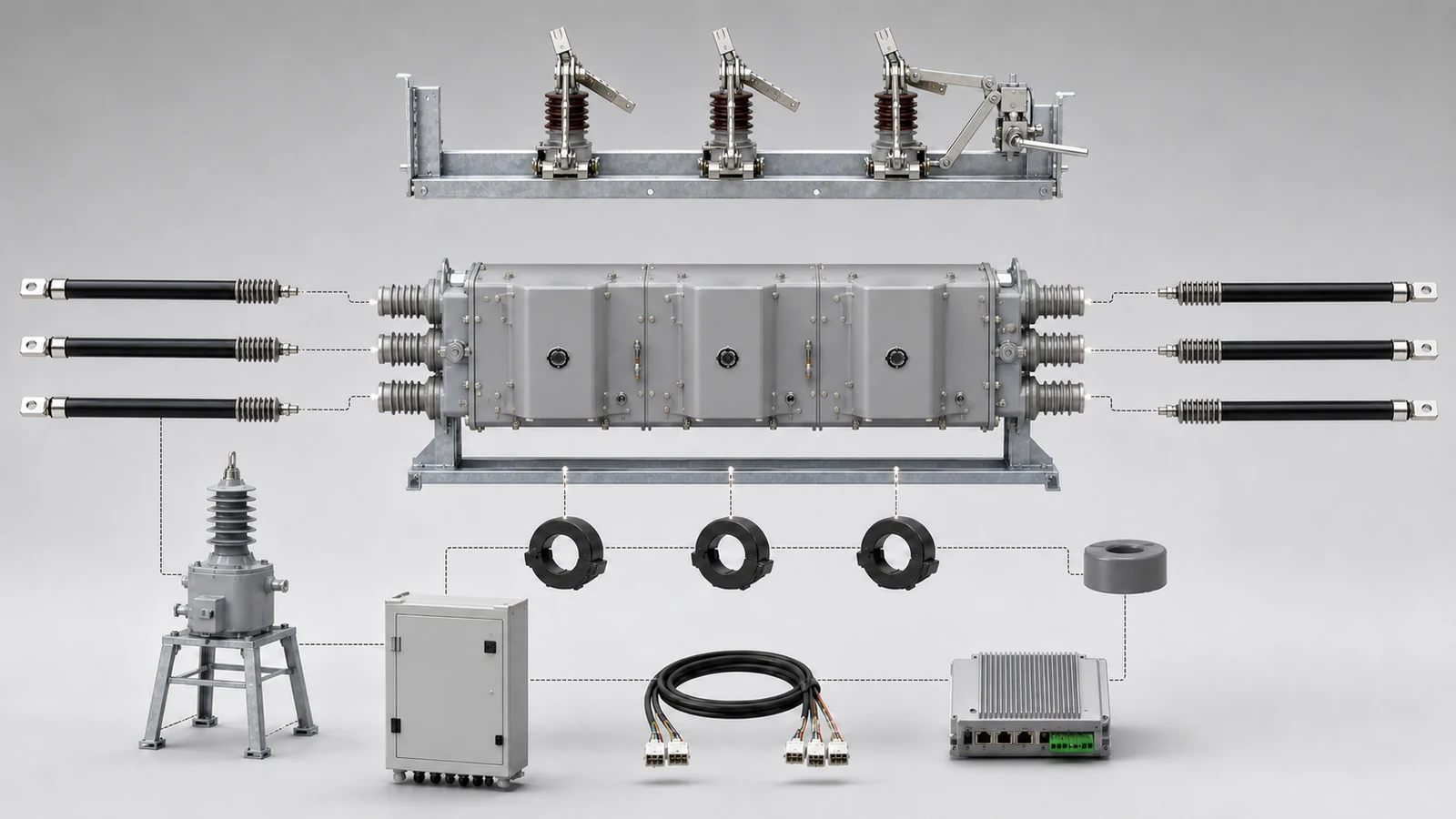
Confirm making-current evidence, DC component or time-constant basis, and transient-recovery-voltage basis where the project requires them. Also confirm short-time duration, terminal interfaces, and evidence revisions. Record every difference between the requested and offered package.
Continuous current needs more than one maximum-load value. Check load duration, future expansion, motor duty, conductor limits, ambient conditions, solar heating, and enclosure effects. State which factor sets the required current class.
Do not approve the optional isolator because it appears in a photograph or family drawing. Its offered configuration, mechanical relationship, indication, interlocking, and authority must match the project arrangement.
The feeder device-role guide assigns the boundary-switch role. This guide selects a package only after that position and its fault zone are approved.
The protection narrative should define user-side phase and earth-fault scenarios, interruption responsibility, trip behavior, lockout, reset, restoration, and any permitted reclose behavior. The neutral grounding method controls the expected earth-fault behavior and influences the ZCT and protection-function requirements.
Specify each phase CT and ZCT input through ratio, class, burden, polarity, grounding, wiring route, and controller mapping. Link the schedule to the protection study and the offered controller revision. A published residual-current range cannot replace a project sensing schedule.
Build a function schedule for every requested protection element. Record the measured quantity, sensing source, setting-group owner, trip target, lockout behavior, event record, alarm, reset permission, and restoration decision. Values belong in the approved study, not in a generic article.
Review failure and degraded states as selection inputs. Missing PT voltage, lost ZCT input, controller restart, communication loss, local-mode selection, and low stored energy need declared indication and command behavior.
Do not let one physical tag collapse six different decisions:
| Boundary decision | Controlling evidence |
|---|---|
| Physical connection | Approved SLD and connection drawing |
| Protection zone | Fault scenarios, protection study, setting sheet |
| Asset ownership | Connection agreement and asset register |
| Operating authority | Utility and site operating-authority matrix |
| Revenue metering | Approved metering scheme and agreement |
| Safe isolation | Approved procedures and isolation drawings |
Remote trip, close, reset, and post-trip restoration need named owners. The equipment supplier cannot assign utility or customer rights through a quotation. Factory-default settings also cannot replace the approved coordination and authority records.
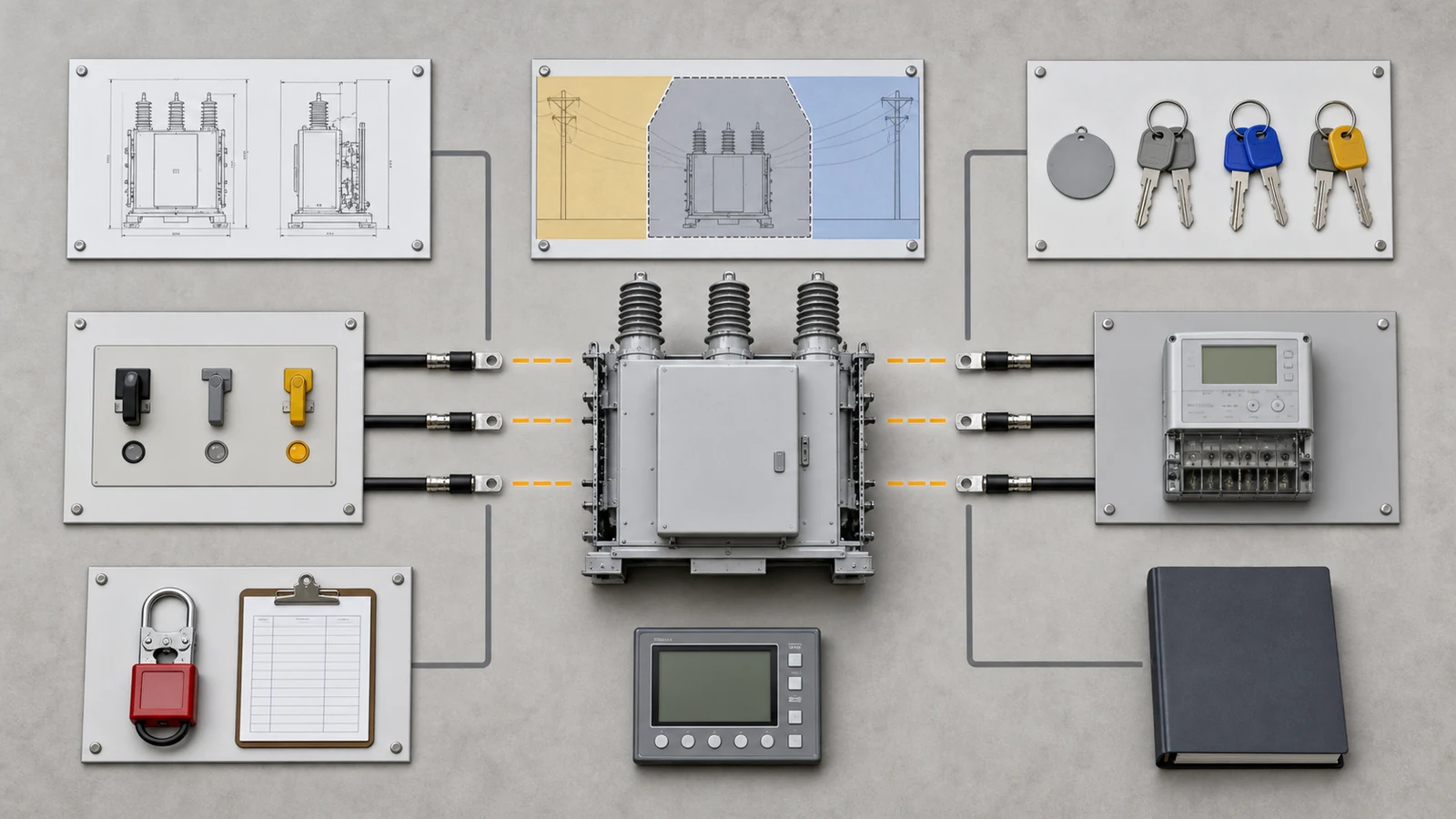
Keep the optional isolator equally bounded. Its presence does not prove interlocking, visible-isolation acceptance, safe-work suitability, or permission to operate it.
An external PT supply description opens a design review. It does not approve the controller power source. Require the PT primary and secondary voltages, ratio, connection, accuracy, burden, fusing, grounding, and voltage-sampling duty.
Compare the controller’s declared allowable input range with the PT secondary under stated operating conditions. Add the controller, modem, indication, heater, trip-close, charging, and other loads to one burden schedule. Define stored-energy behavior, alarms, local fallback, and degraded states.
RS485 identifies a physical interface. A wireless DTU identifies a transport component. Neither defines the application protocol, gateway, network address, point list, command semantics, quality states, timestamps, time source, or event retention.
The package also needs cybersecurity approval, remote-command permissions, SIM and APN ownership, credentials custody, firmware policy, licenses, configuration backups, and handover responsibility. Wiring and architecture drawings must match the selected controller, gateway, and revision.
Do not transfer assumptions from intelligent disconnector commissioning. That article controls an ICC and charging package for a no-load disconnector. A boundary breaker has different fault duty, sensing, FDR, PT, and authority requirements.
A commercial quotation is not a technical release. Use this RFQ checklist to separate budget inputs from approval files:
| Package item | RFQ input | Approval evidence | Hold condition |
|---|---|---|---|
| System and site | SLD, voltage, frequency, load, fault level, insulation, environment, pole drawing | Approved project specification and studies | Basis is unissued or changed |
| Breaker and isolator | Ratings, terminals, mechanism, duty, interlocking | Selected manufacturer data and drawings | Offered revision is unclear |
| CT, ZCT, and PT | Ratios, classes, burdens, polarity, grounding, fusing, loads | Approved schedules and wiring | Any interface lacks a value |
| Protection | Fault scenarios, neutral grounding, functions, coordination owner | Protection study, setting and sequence approval | Logic or authority is assumed |
| Responsibility | Connection, ownership, operation, metering, isolation, restoration | Executed matrix or agreement | Responsibility remains implicit |
| Communication | Port, protocol, bearer, gateway, address, points, time, security | Architecture, point list, approval, backup | Only a feature label is returned |
| Documents | Datasheet, drawings, controller notes, test references, deviations | Revision register and traceability | Files do not match the offer |
Ask suppliers to identify exclusions and deviations against the same schedule. Require filenames, revisions, model references, and configuration identifiers. A generic catalog can screen a family, but only the selected evidence pack can support technical release.
Use two controlled milestones. The RFQ return supports commercial and technical comparison. The approval return adds selected drawings, calculations, controller files, evidence references, and closed deviations. Do not treat an unchanged price offer as proof that the approval configuration is unchanged.
Representative engineering review, entirely synthetic, illustrative, and non-universal. This is not a XIYA POWER customer, supplier, factory, quotation, order, design, selection, installation, test, commissioning, maintenance, failure, outage, or field case. No compliance, acceptance, supply, or result is claimed.
The synthetic schedule states a 10 kV nominal system, 12 kV highest-equipment class, and 50 Hz. Maximum expected continuous current is 286 A. The short-circuit study reports 14.2 kA symmetrical RMS at the proposed boundary.
A preliminary return states 12 kV, 400 A, and 16 kA. It omits making current, DC or time-constant basis, TRV basis, short-time duration, terminals, and evidence revision. The values do not close breaker selection.
The neutral is arc-suppression-coil grounded. The narrative requests user-side earth-fault detection, phase-fault interruption, event capture, and lockout. CT/ZCT ratio, class, polarity, grounding, settings, coordination margin, reset, and reclose authority remain open.
The physical connection is tagged CP-17, but responsibility and operating-authority records are absent. The return states external PT supply without ratio, secondary voltage, burden, accuracy, fusing, grounding, controller range, sampling load, or auxiliary-load allocation.
The utility requests IEC 60870-5-104 over LTE with event timestamps. The return says only RS485 or DTU wireless. Gateway, SIM/APN, cybersecurity, address, points, time, command authority, credentials, and backup ownership are unassigned.
The site drawing also shows an optional visible isolator. Its interlocking, indication, operating authority, and safe-work role are not released.
Synthetic illustrative review table:
| Gate | Decision | Primary omissions | State |
|---|---|---|---|
| 1 | Breaker duty, insulation, terminals, installation, evidence | Making, DC/TRV basis, short-time duration, drawings, revision | Hold |
| 2 | Protection zone, sensing, coordination, reset, reclose | Earth-fault basis, CT/ZCT data, settings, authority | Hold |
| 3 | Connection, authority, isolation, PT supply, loads | Agreements, PT schedule, controller range, load allocation | Hold |
| 4 | Communication, points, time, security, handover | Gateway, point list, approval, credentials, backup | Hold |
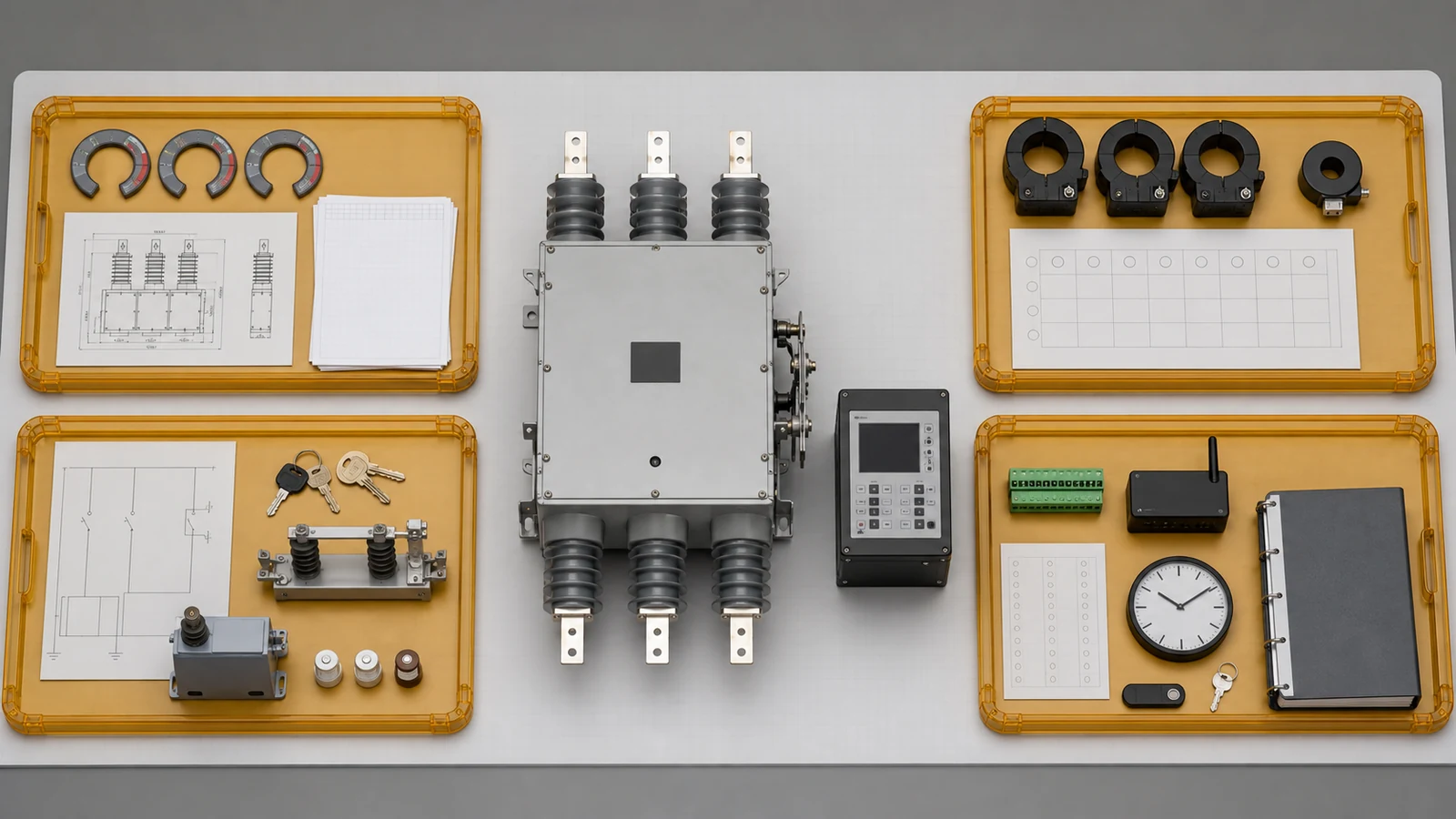
No selection, compliance, acceptance, order, supply, installation, test, commissioning, reliability, or operating result is claimed. Each gate remains independent until its controlled evidence is approved.
Provide the SLD, boundary role, voltage, frequency, load profile, fault study, insulation and environment, neutral grounding, protection requirements, CT/ZCT/PT schedules, authority records, communication schedule, drawings, and required evidence.
No. The device marks a technical position. Connection agreements, asset records, operating procedures, metering agreements, and approved isolation documents assign ownership, authority, metering, and safe-work responsibility.
State ratio, class, burden, polarity, grounding, wiring, controller mapping, and evidence revision. Derive the ZCT and earth-fault requirements from the neutral grounding method, fault basis, and protection study.
No. Define primary and secondary voltages, ratio, connection, accuracy, burden, fusing, grounding, controller input range, sampling duty, auxiliary loads, stored energy, alarms, and degraded behavior.
No. Also define protocol, bearer, gateway, addresses, point semantics, commands, quality, timestamps, time source, cybersecurity, remote authority, credentials, firmware, licenses, backups, and handover ownership.
Hold release whenever duty, protection, sensing, responsibility, isolation, PT power, communication, security, configuration, drawings, deviations, or revision traceability remains missing, incompatible, uncontrolled, or unapproved.