Quotation form
Send an inquiry
Start with the basics. Our team can follow up for missing drawings, standards or packing details.
Submitted details are used only for quotation, technical review and project communication.
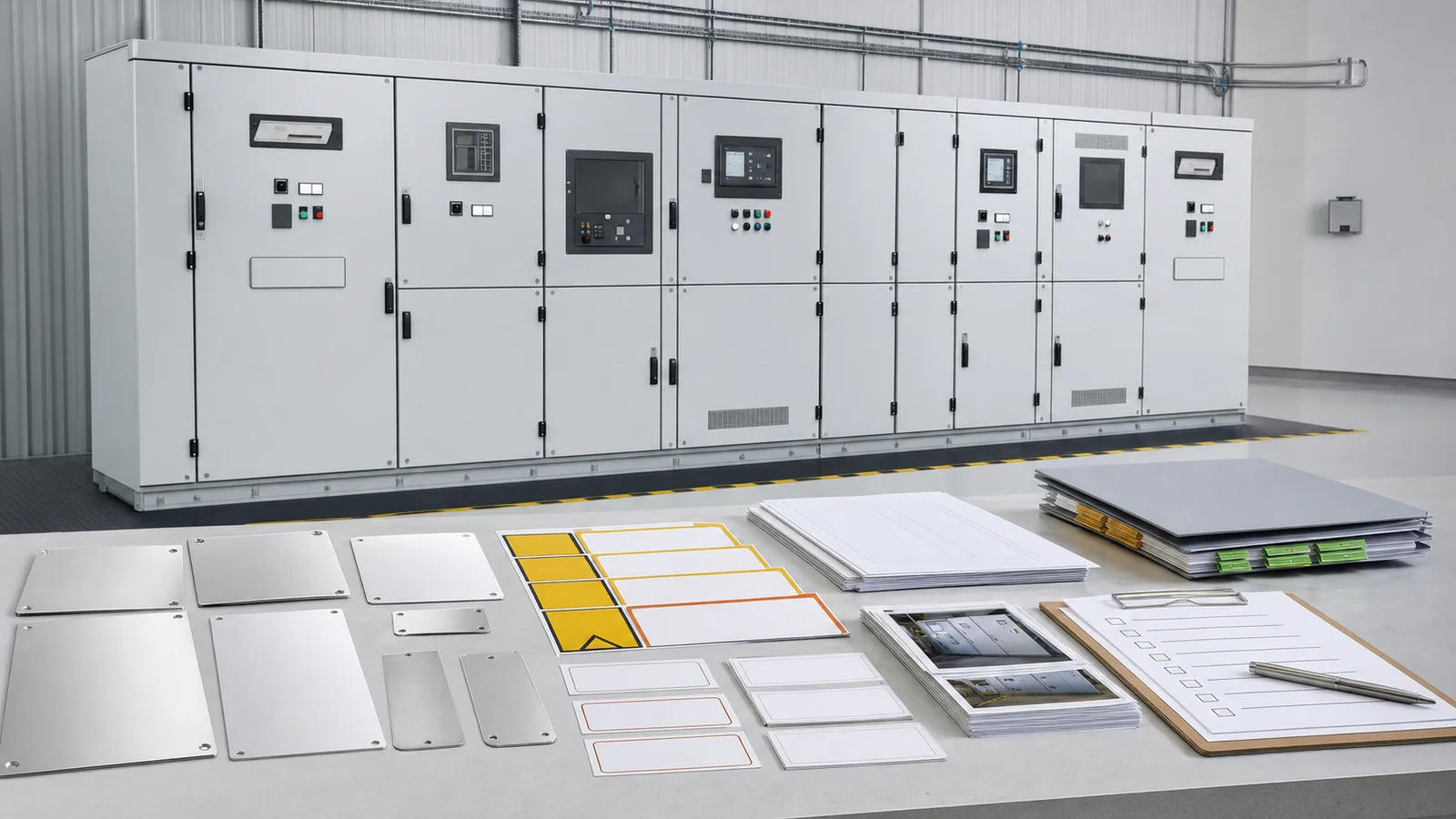
All images are generated illustrative technical visualizations, not XIYA POWER factory, customer, quotation, order, drawing, nameplate, label, translation, approval, inspection, test, shipment, installation, commissioning, maintenance, or field photographs.
Electrical equipment nameplate document control should treat ratings, language, artwork, physical marking, installed evidence, and release status as one traceable package. Freeze the source data before artwork starts, authorize every destination-specific word and symbol, and hold release whenever the installed marking cannot be reconciled to the approved file.
This is a process framework, not a universal list of mandatory fields. The applicable product standard, destination rules, project specification, and approved equipment data determine the actual content.
Start by separating marking classes. An equipment nameplate identifies the unit and its ratings; operating, safety, terminal, circuit, accessory, package, and shipping labels serve different owners and evidence bases. The live OEM/ODM manufacturing scope identifies logo, model text, rating text, warning label, language, and destination marking as buyer inputs that can affect sample approval and production release.
Use one stage gate matrix. Each row needs a gate owner, required input, release evidence, and hold condition.
| Release gate | Gate owner | Required input | Release evidence | Hold condition |
|---|---|---|---|---|
| Equipment identity | Engineering | Equipment schedule, model and serial format | Reconciled nameplate data sheet | Identity or revision differs |
| Ratings | Engineering | Approved ratings and applicable field list | Checked artwork tied to source revision | A value is absent or unsupported |
| Operating labels | Engineering | Schematic, operating sequence, terminology | Approved circuit and operating-label set | Text conflicts with controlled logic |
| Safety and language | Engineering and language approver | Warning basis, destination language, terminology | Named approval of final text | Language or warning basis is open |
| Symbols and marks | Compliance owner | Destination requirement and authorization record | Mark-to-evidence mapping | A mark lacks authorization |
| Physical definition | Engineering and quality | Marking specification and approved drawing | Dimensions, material, method and position | Construction or location is undefined |
| Installed evidence | Quality | Inspection and test plan and equipment register | Unit-mapped photographs and inspection record | Coverage or traceability is incomplete |
| Marking release | Authorized release owner | Closed reviews and deviations | Signed release note | Any independent gate remains open |
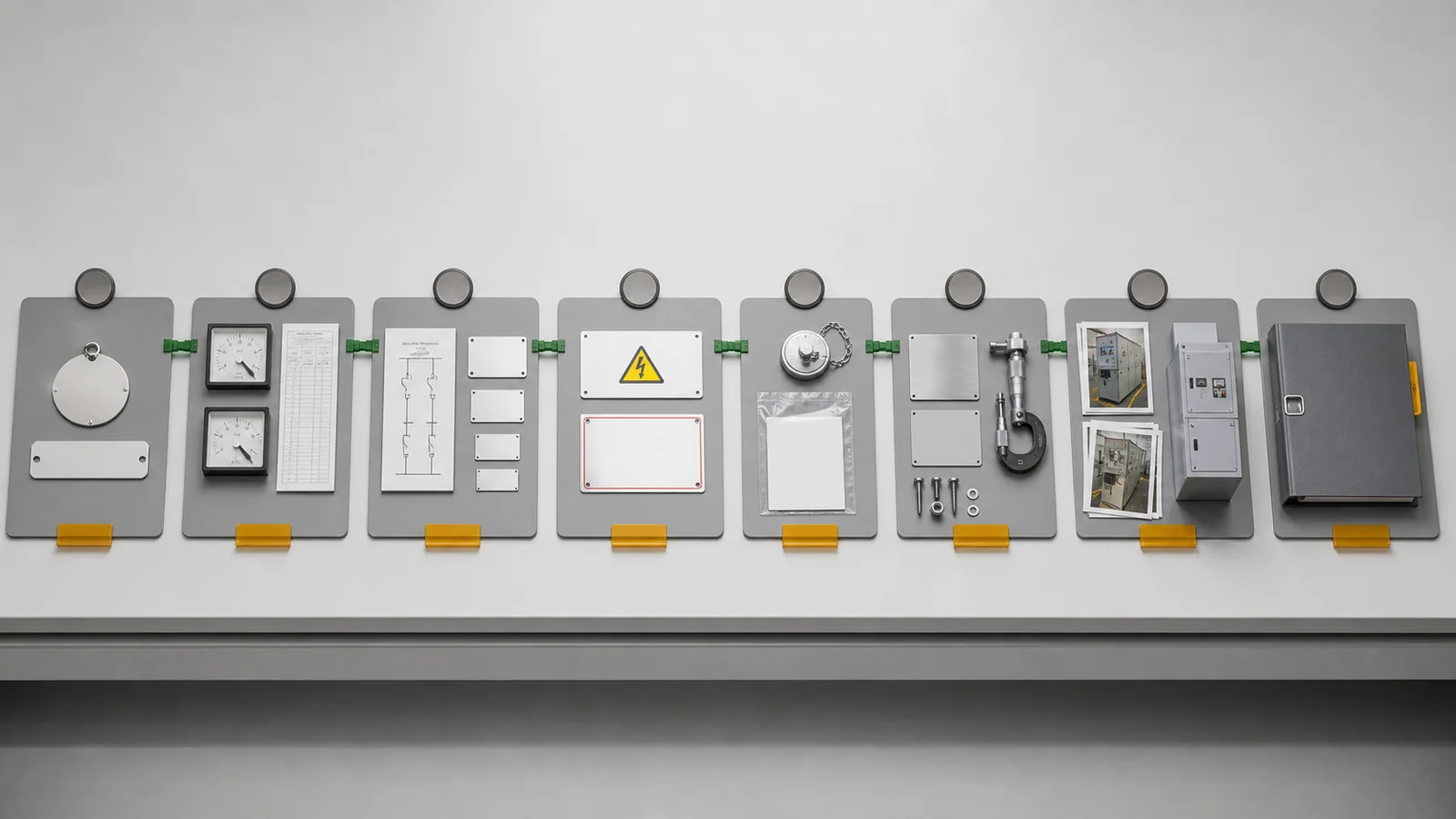
Package and shipping labels also take controlled inputs from the packing specification, packing list, destination, mass, handling, and case identity. That does not make them equipment nameplates. Keeping the classes separate prevents a logistics mark from being used as evidence for a technical rating, or an approved nameplate from being treated as approval of the shipping mark.
Create a source hierarchy before a designer formats text. The approved equipment schedule should control the unit identity and project values. Product-specific standards and destination rules help determine which fields or warnings apply. The project specification, authorized brand records, approved drawing, and terminology sheet add project and physical constraints.
| Controlled source | What it contributes | Release question |
|---|---|---|
| Equipment schedule | Model, identity, ratings, auxiliary supply, configuration | Is the current approved revision identified? |
| Applicable standard set | Relevant marking-field and safety basis | Is the exact product and edition basis recorded? |
| Project specification | Buyer fields, destination needs, language, evidence | Are project additions separated from standard fields? |
| Approved drawing | Position, envelope and configuration references | Does artwork use the same configuration baseline? |
| Authorization record | Logo, certification mark, country-of-origin basis | Is each controlled mark permitted for this equipment? |
| Terminology sheet | Exact source and translated terms | Is the named language approval current? |
The official page for IEC 62271-1:2017+AMD1:2021 describes common specifications for indoor or outdoor AC switchgear and controlgear above 1,000 V and up to 60 Hz, while particular equipment standards may specify otherwise. That public scope does not prove every required field, destination language, certification mark, artwork, or physical installation. Record the product-specific and project basis instead of turning one standard title into a universal checklist.
Use a revision register to map changed inputs to affected artwork. The linked switchgear drawing revision control process covers the wider drawing workflow; this marking review only needs the released source revision and a documented impact decision. Never copy a rating from a catalogue, quotation, memory, or previous project when the approved equipment record is the required source.
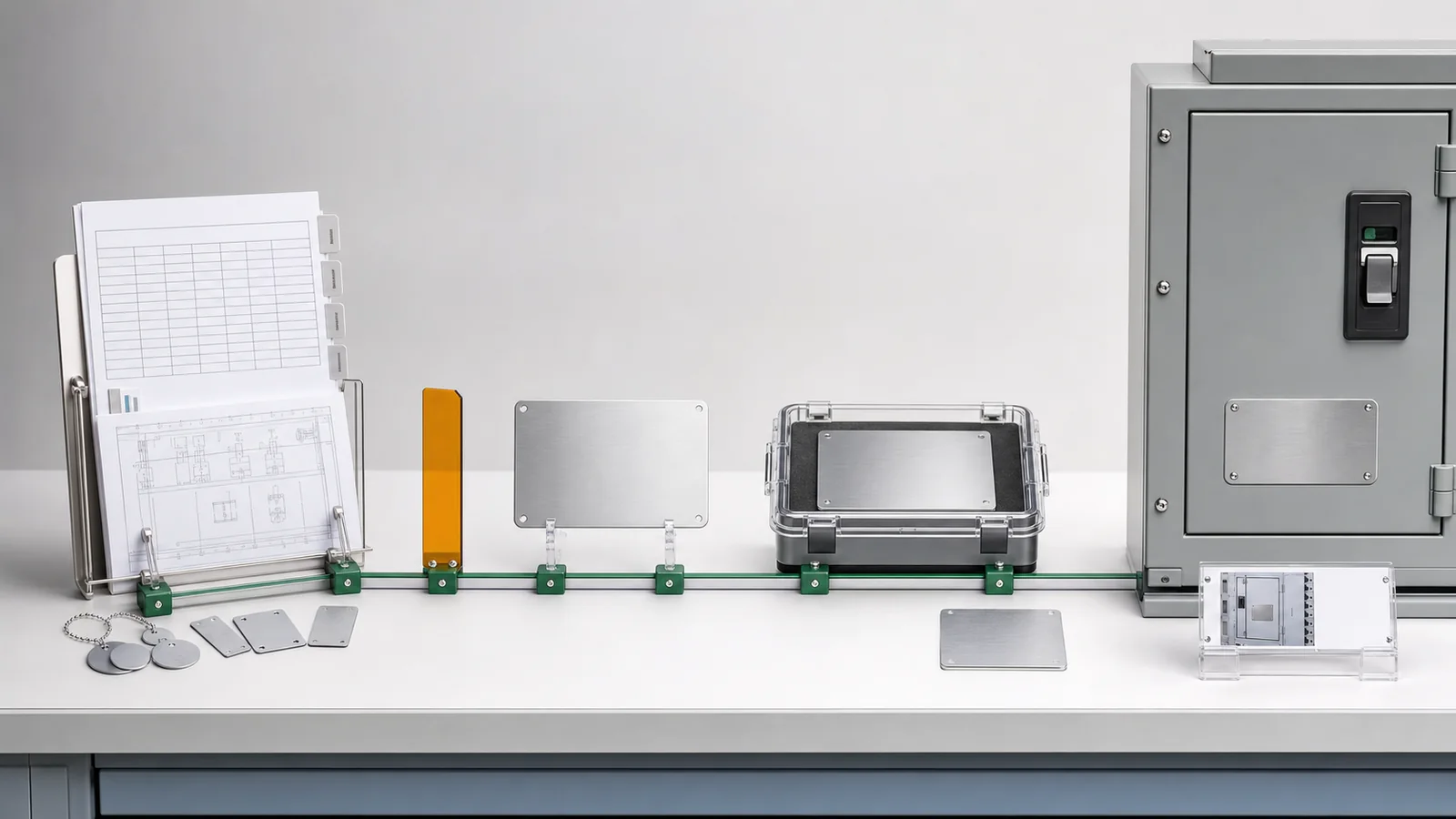
A translation file is not an approved label. Review source text, technical terminology, destination requirement, visual hierarchy, and final artwork together. Name the approver and preserve the decision against the exact file revision.
| Review item | Required control | Evidence | Hold example |
|---|---|---|---|
| Source text | Approved warning or operating basis | Source-text register | Text was drafted outside the baseline |
| Translation | Controlled terminology and named review | Language approval record | Machine output has no named approver |
| Units and symbols | Applicable project or standard basis | Symbol and unit mapping | A generic symbol has no mapped source |
| Warning hierarchy | Required signal, hazard and instruction structure | Approved warning schedule | The final label omits a required element |
| Destination marks | Current rule, license or buyer requirement | Authorization record | A certification mark is unsupported |
| Typography | Capitalization, punctuation and line-break rules | Final artwork proof | A line break changes the intended meaning |
Where applicable, country-of-origin text, logos, certification marks, and private-label identities require their own authorization. Do not infer permission because a graphic file was supplied. Likewise, a fluent translation does not establish technical accuracy or destination acceptance. The evidence must identify what was reviewed, by whom, against which requirement, and at which revision.
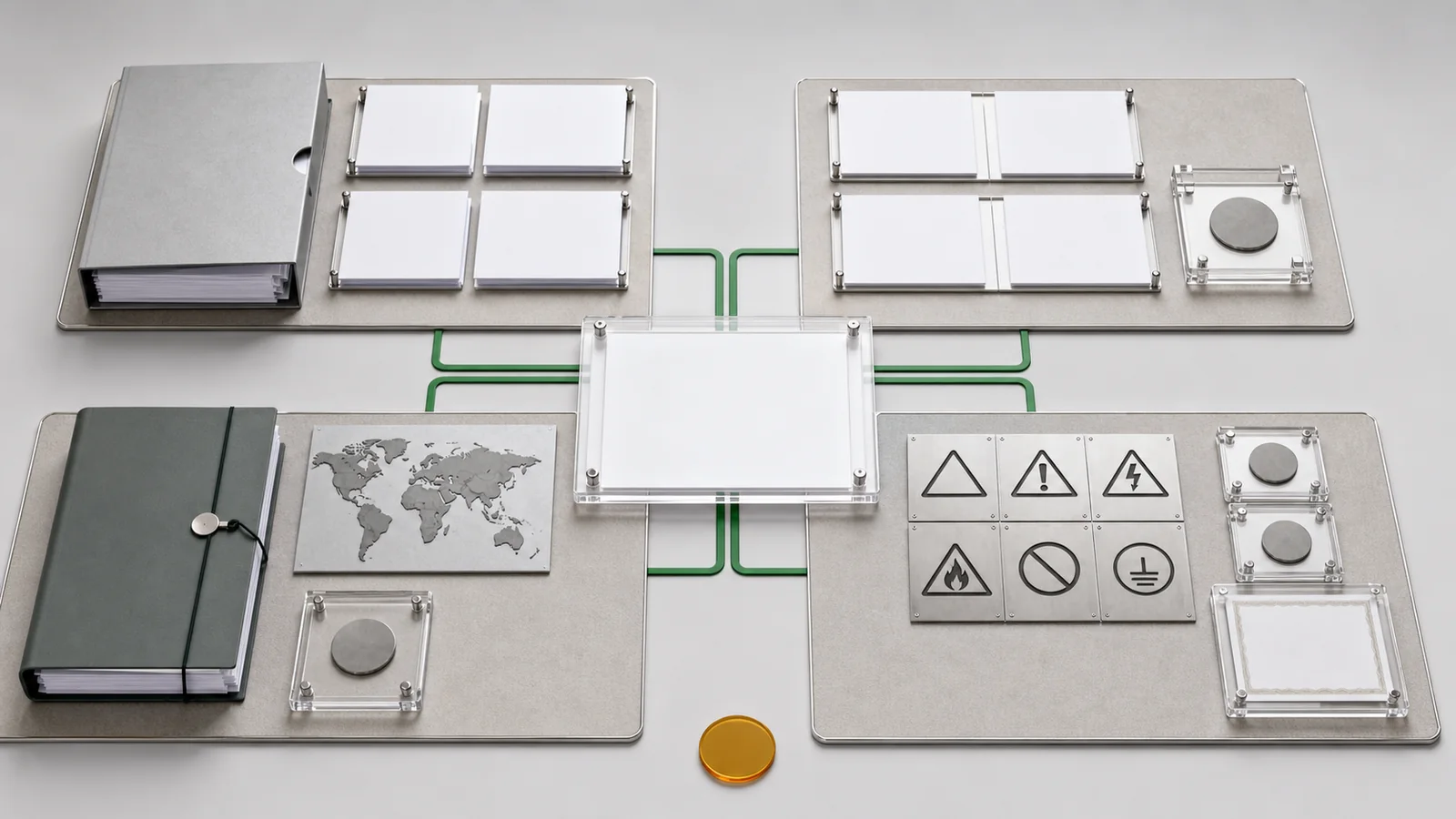
Artwork control governs file identity, revision, approval status, and source mapping. Physical control governs dimensions, mounting position, substrate, thickness, finish, print or engraving method, adhesive or mechanical fixing, legibility, and the agreed environmental basis. Under this review framework, both must close before the file becomes a production master.
Define a unique artwork code and revision for every marking class. Put dimensions and orientation in the marking specification or controlled position drawing. Record clearances and the relationship among nameplates, mimic diagrams, warning labels, operating controls, and access panels. A statement such as metal plate or industrial label is insufficient when the specification requires a defined substrate, thickness, method, or fixing.
Where the project requires a physical proof, connect it to the first-article and sample approval process. The record should identify the artwork revision, physical sample, review basis, decision, conditions, and change triggers. Approval of one visual sample cannot silently extend to a revised rating, language, material, process, or equipment configuration.
Release only the approved artwork revision to the fabricator. Record the production master location and which file was used. If an input changes, review every dependent artwork file, document affected and unaffected decisions, and reapprove the changed files before production continues.
Artwork approval does not prove that the correct marking reached every unit. Add the marking review to the switchgear inspection and test plan and reconcile the physical equipment to a controlled evidence set.
| Evidence item | Required return | Decision or hold |
|---|---|---|
| Marking schedule | Each class, unit identity and artwork revision | Hold if coverage or revision is incomplete |
| Artwork register | File identity, approval and production-master status | Hold if a referenced file is unapproved |
| Equipment register | Unit and serial mapping | Hold if a photo cannot be tied to one unit |
| Installed-photo index | Unit, class, artwork revision, reviewer and result | Hold if filenames replace traceability |
| Inspection record | Review result and deviation disposition | Hold if an exception lacks ownership |
| Release record | Closed deviations and named signature | Hold if the signature or evidence is absent |
The marking dossier should include the marking specification, approved artwork, revision register, language and authorization records, sample approval where used, material declaration, inspection record, installed-photo index, deviation closures, document register, and signed release note. A missing record means the evidence is incomplete; it does not prove that the underlying activity did or did not occur.
After marking release, the approved artwork index and installed evidence can enter the export packing and document handover workflow. That downstream process owns packing and shipment records. This article owns only the marking package supplied to it.
Representative engineering review, entirely synthetic, illustrative, and non-universal. This is not a XIYA POWER customer, supplier, factory, quotation, order, design, nameplate, label, translation, approval, inspection, test, shipment, installation, commissioning, maintenance, or field case. No compliance, acceptance, safety, durability, destination approval, or result is claimed.
The synthetic candidate contains eight 24 kV indoor metal-clad switchgear panels, identified SYN-MV-001 through SYN-MV-008. Its controlled schedule requires 24 kV, 630 A, 20 kA for 3 s, 50 Hz, and 110 V DC auxiliary supply. Marking schedule revision C calls for an equipment nameplate, mimic and circuit labels, terminal labels, earthing labels, and bilingual English-Spanish warning labels on each panel.
Terminology sheet revision B fixes EARTHING SWITCH, CIRCUIT BREAKER, BUS COUPLER, and approved Spanish equivalents; automatic translation is not authorized. NP-24-C and LB-24-C are the synthetic artwork baselines. The input asks for mechanically fixed anodized-aluminum equipment plates and laminated warning labels, with returned material and fixing declarations. The inspection and test plan requires artwork approval before production and installed-marking review before release.
The illustrative return contains these open findings:
BUS SECTION instead of BUS COUPLER.metal plate and industrial label.Hold 1: identity and ratings. Reconcile SYN-MV-001 through SYN-MV-008, all six stated electrical values, revision C, and complete NP-24-C artwork. A superseded file with omitted fields cannot close this gate.
Hold 2: language and authorization. Resolve BUS SECTION versus BUS COUPLER, return bilingual installed evidence, name the Spanish approver, and map the certification symbol to valid evidence or remove it.
Hold 3: physical definition. Identify dimensions, position, substrate, thickness, finish, print or engraving, fixing, legibility basis, and agreed environment for each marking class.
Hold 4: controlled evidence. Return revision-C artwork, an eight-unit photo index, the inspection record, all deviation closures, and a signed marking release tied to the revision-C equipment schedule.
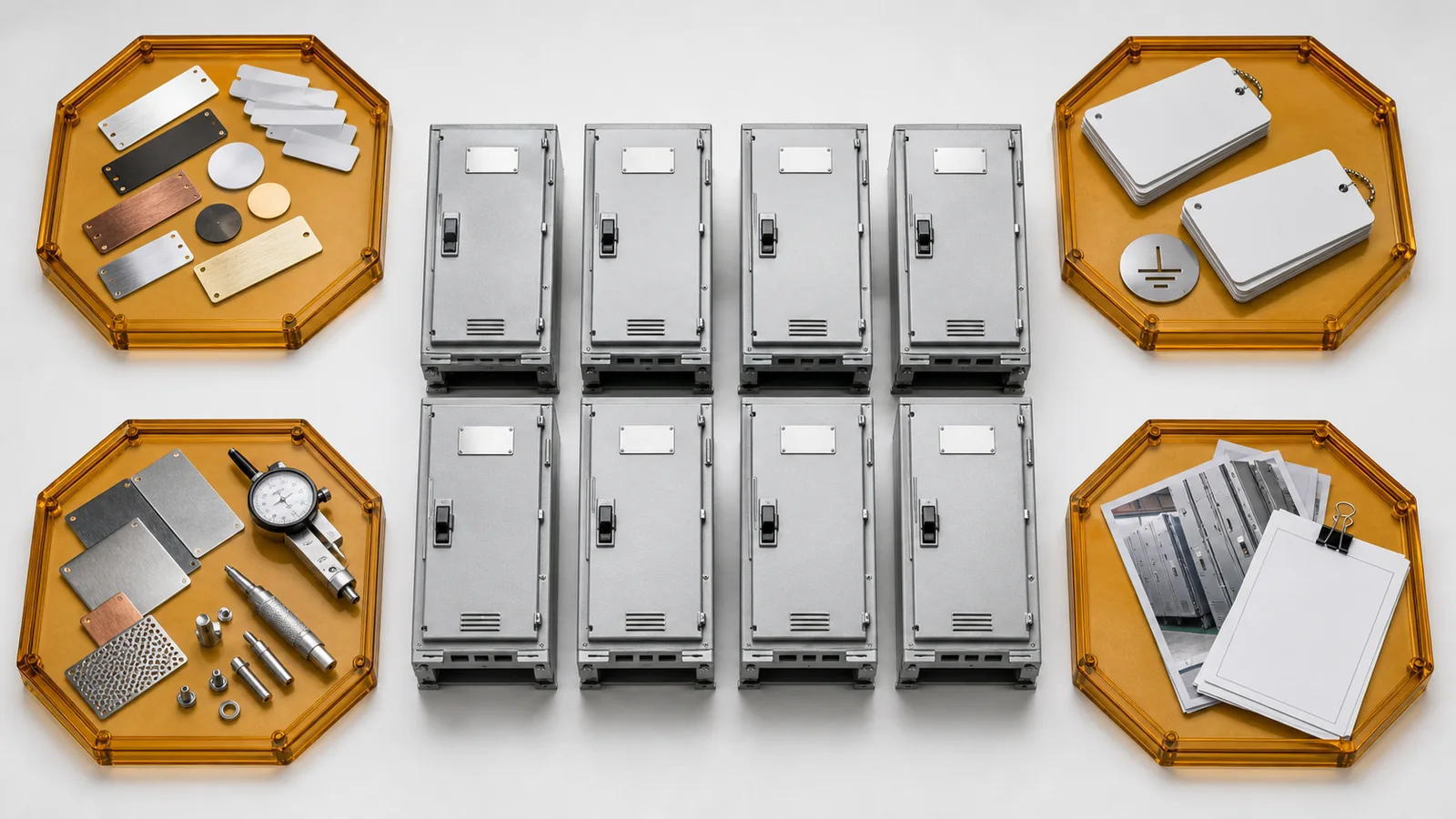
All four holds remain open. The synthetic marking package is not approved or release-ready.
Freeze the current approved equipment schedule, applicable product and project requirements, equipment identity, ratings, auxiliary supply, configuration, serial format, approved drawing, destination requirements, authorized brand data, and terminology. Record their revisions and owners before artwork starts.
No. Approval also needs controlled source text, the destination requirement, a terminology sheet, named language review, and final artwork tied to the approved revision. Machine output or an editable translation without those records remains an open input.
Use the current approved equipment schedule or other project-designated rating record. Standards may determine applicable fields, but the project values must come from the controlled equipment basis. Resolve any conflict with drawings or schedules before artwork release.
Record the change in the revision register, identify every dependent artwork file, document affected and unaffected decisions, revise affected files, review sample status, and reapprove the production master. Do not continue against a superseded file.
Use an installed-photo index that maps unit identity, marking class, and approved artwork revision, supported by the equipment register, inspection result, deviation disposition, and signed release. Unmapped filenames or partial photographs are incomplete evidence.
Hold release for unsupported ratings, superseded artwork, unapproved language or symbols, undefined material or fixing, incomplete unit mapping, open deviations, or an unsigned release. If a required record is missing, mark the evidence incomplete; do not infer whether the activity occurred.