Quotation form
Send an inquiry
Start with the basics. Our team can follow up for missing drawings, standards or packing details.
Submitted details are used only for quotation, technical review and project communication.

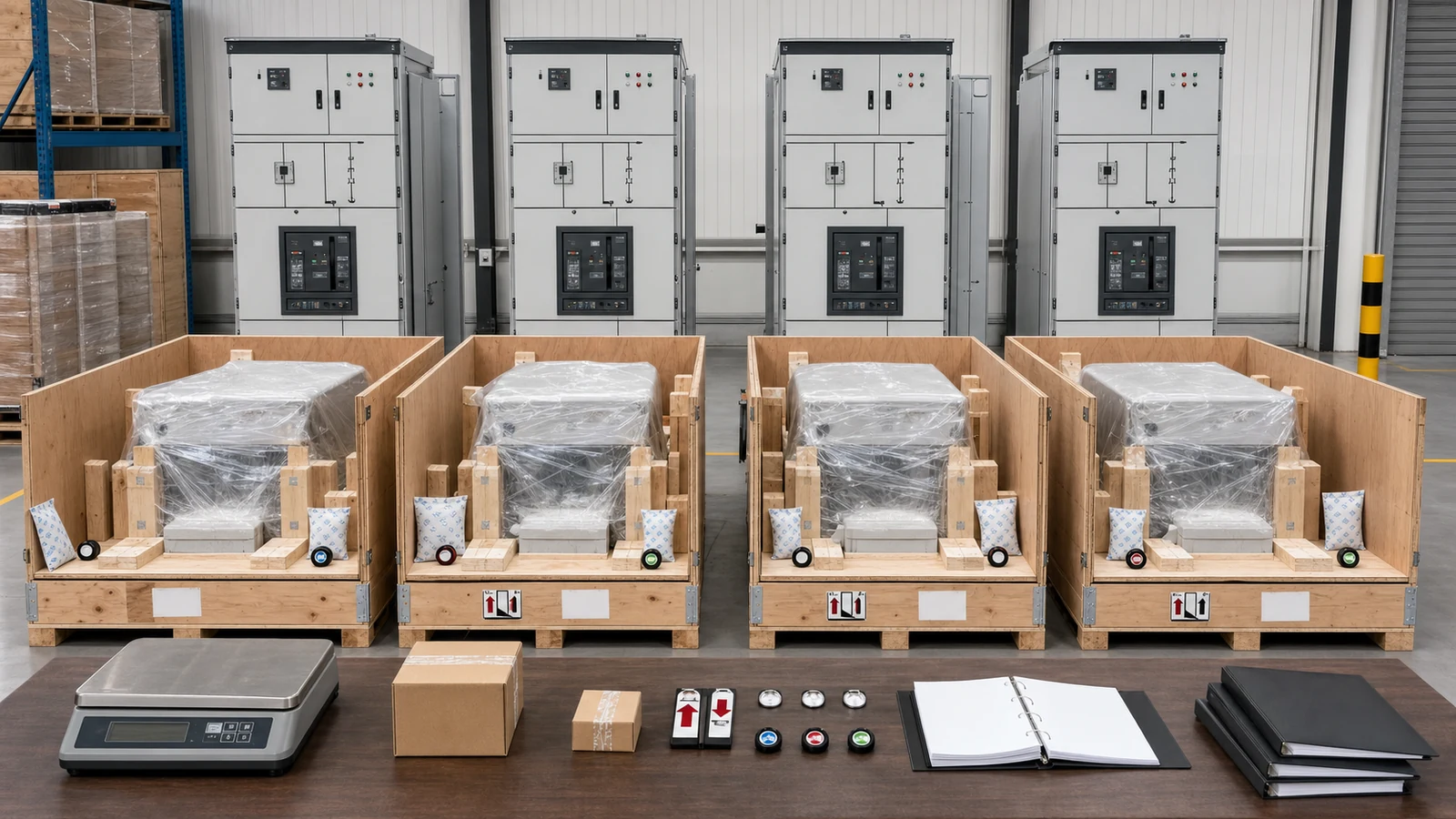
All images are generated illustrative technical visualizations, not XIYA POWER factory, quotation, order, design, packing, inspection, test, shipment, delivery, commissioning, maintenance, damage, or field photographs.
Freeze high voltage equipment export packing documents as one shipment release package. Do not ship until packing revisions, preservation, package identity, weights, contents, inspection records, deviations, the document register, and the release note agree with the approved order basis.
This guide defines the shipment-release evidence process. Project-specific structural, lifting, preservation, transport, and destination requirements still require approved engineering inputs.
Packing is not a warehouse activity added after production. The OEM and ODM manufacturing scope treats packing basis, destination, trade terms, inspection records, and required documents as quotation and production-release inputs.
Build one stage gate matrix. Name the gate owner, required input, release evidence, and hold condition for every row.
| Release gate | Gate owner | Required input | Release evidence | Hold condition |
|---|---|---|---|---|
| Controlled design | Engineering | Approved drawing and revision register | Matched equipment and packing revisions | Revisions differ |
| Transport state | Engineering and production | Removable parts, supports, blocking, clearances | Packing drawing and transport-state record | Equipment state is undefined |
| Preservation | Quality and packing | Route, storage, packing specification | Barrier, desiccant, corrosion, and sealing records | Preservation period is unsupported |
| Package identity | Logistics and quality | Package count, serials, contents, spares | Controlled packing list and traceability | Count or contents disagree |
| Handling | Engineering and logistics | Net/gross weight, center of gravity, lifting, forklift, stacking | Approved handling and loading drawings | Handling data is absent |
| Inspection | Quality | Inspection and test plan, sample approval where used | Signed final packing record and photos | Hold point is unsigned |
| Documents | Document control | Required file list and formats | Complete document register and transmittal | Required record is missing |
| Shipment release | Authorized release owner | Closed gates and deviations | Signed release note | Any gate remains open |
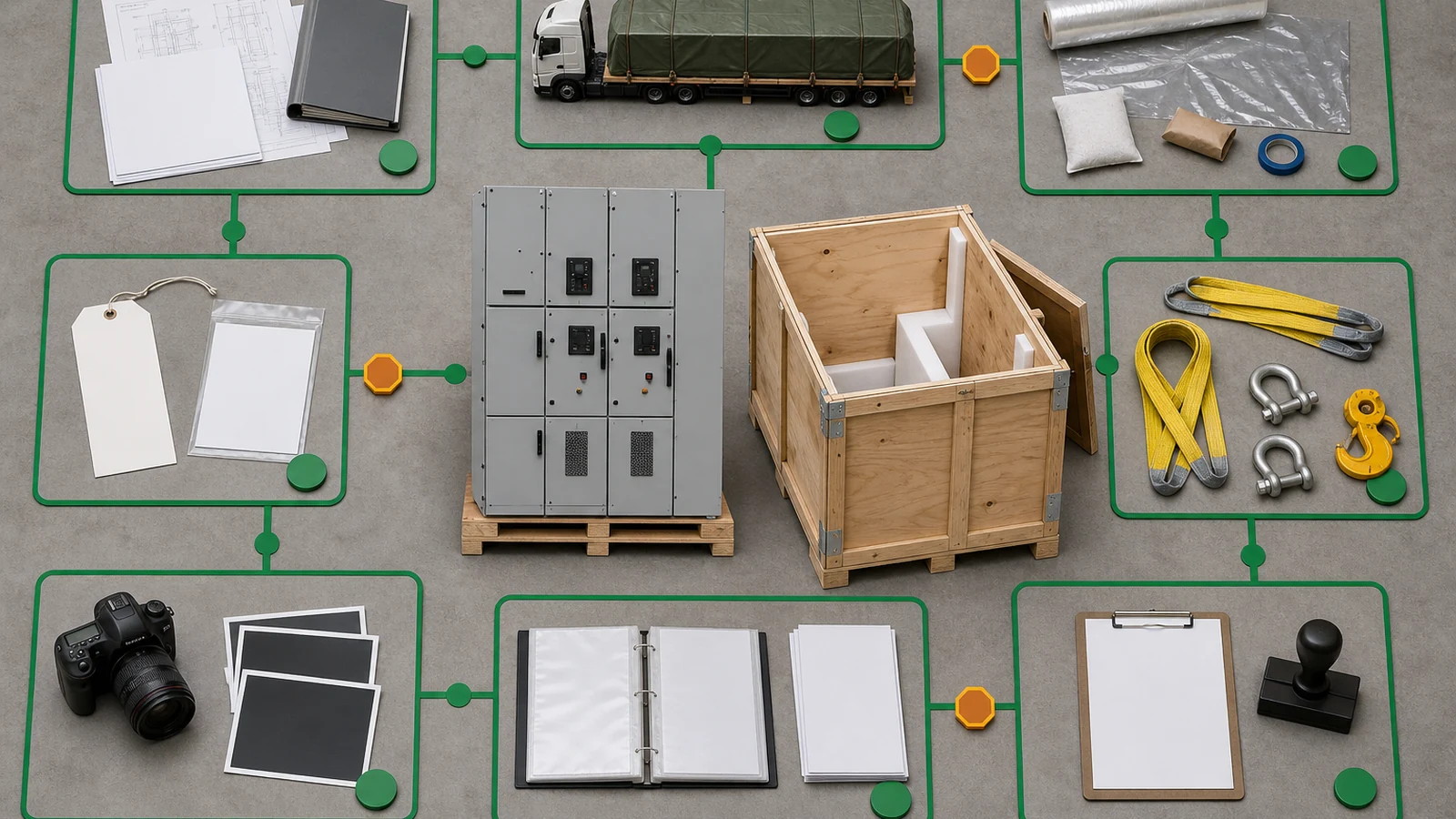
The high-voltage equipment manufacturing workflow places this release after controlled production and inspection. Container closure or carrier booking does not close unresolved technical records.
Where the order uses a packing sample or first-package approval, define its acceptance basis before the pack is built. Record the equipment transport state, support locations, contact materials, barrier overlap and seal method, desiccant placement, accessory separation, closure fasteners, skid construction, handling marks, and photo viewpoints. Tag the sample record to the packing drawing revision and the equipment configuration it represents.
Approval of an attractive closed crate is not approval of the concealed restraints or preservation system. If a later package changes dimensions, support geometry, barrier material, loose-part allocation, or handling method, return the affected evidence for review instead of extending the sample approval by assumption.
Start from the project specification, approved equipment drawing, declared transport state, route, storage period, and destination conditions. The packing drawing must use the same equipment revision. Match preservation and handling decisions to selected manufacturer data. Apply the drawing revision control process to crate dimensions, supports, lifting features, cable or busbar removals, and accessory positions.
Freeze these layers separately:
| Layer | Required definition | Evidence before release |
|---|---|---|
| Equipment interface | Base frame, support points, removable items, blocked moving parts | Approved packing drawing and transport-state list |
| Preservation | Barrier type, sealing method, corrosion protection, desiccant basis, humidity indication, period | Packing specification and preservation record |
| Inner restraint | Blocking, bracing, abrasion protection, accessory separation | Inspection record and photo register |
| Crate or skid | Materials, fasteners, dimensions, base, stacking, weather exposure | Material list and approved drawing |
| Handling | Net/gross weight, center of gravity, lift points, forklift entries | Marked package drawing and verified weights |
| Container interface | Package arrangement, blocking, lashing, access, load distribution | Approved loading plan and loading record |
Where raw-wood bases or dunnage move in international trade, the official IPPC ISPM 15 page describes phytosanitary measures intended to reduce pest risk. It includes raw-wood dunnage and excludes processed wood such as plywood when processing makes it pest-free. It does not approve crate strength, lifting, preservation, weight, or container loading.
Confirm which components are raw wood and retain treatment-mark evidence where applicable. Plywood side panels do not close a decision about separate raw-wood skid bases.
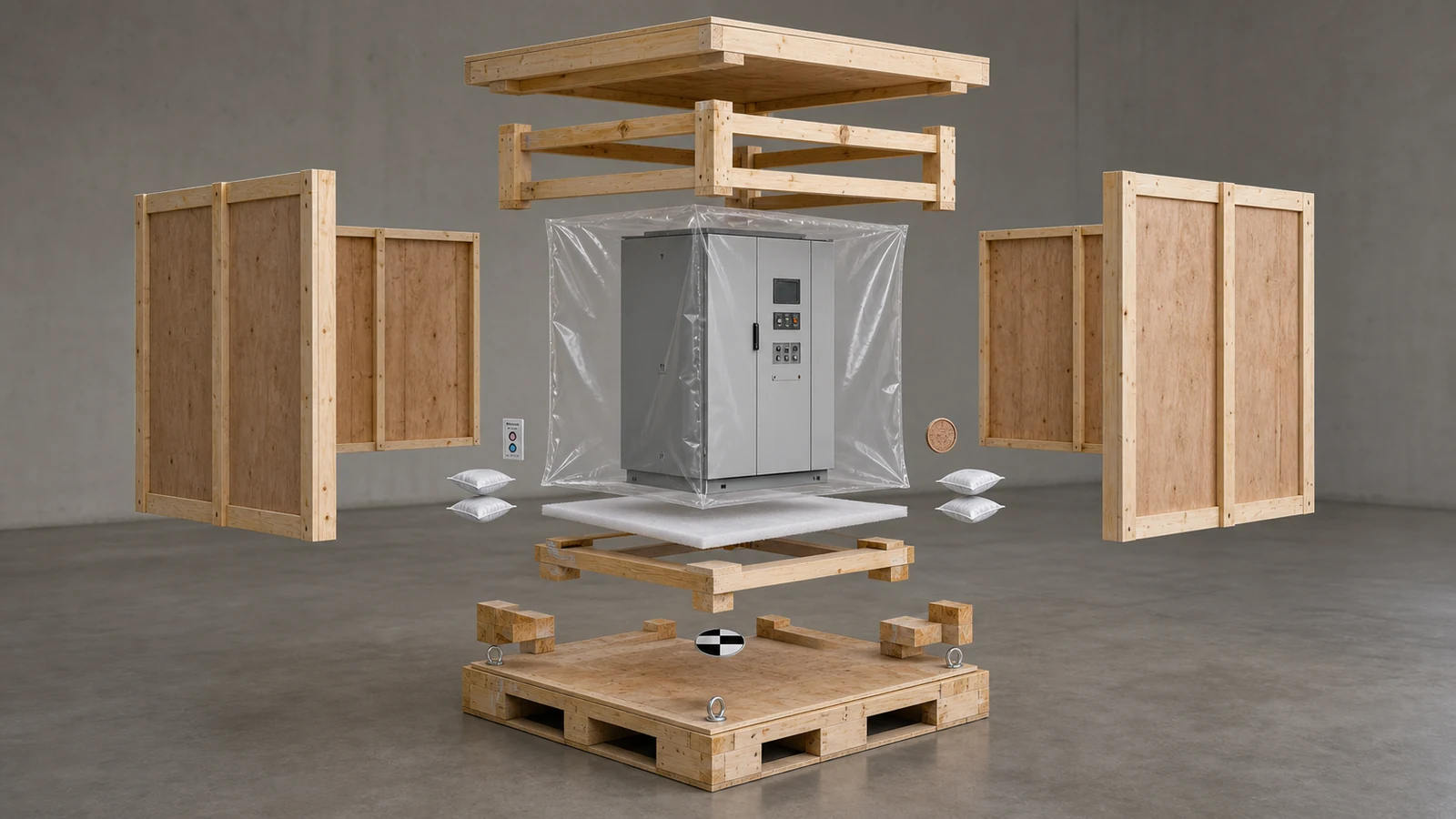
Give every package one unique ID linked to the purchase order, equipment tag, serial number, drawing position, and contents list. Do the same for accessory crates, operating tools, connectors, loose busbars, keys, hardware, and spares.
The packing list should state package ID, package type, equipment or serial reference, dimensions, net weight, gross weight, center of gravity where needed, and itemized contents. Reconcile its totals with the commercial invoice and loading plan before release.
Photograph the package before closure, after restraint and preservation, after barrier sealing, after crate closure, and after marks are applied. The photo register should identify the package, date, inspection stage, and record revision. A folder of unnamed images is not traceability.
Shipping marks should identify the package and destination and show approved handling information. Keep product nameplate text, destination language, and regulatory marking in their separate approval process. This article controls the shipment identity that connects the physical package to the handover set.
Combining accessory and spare packages is a controlled change. Update the contents schedule, package count, weights, dimensions, photos, marks, and documents. Do not silently merge them because both fit in one crate.
Create the document register before packing starts. For each record, state title, document number, revision, format, required status, responsible owner, planned issue date, and buyer receipt status.
The shipment handover set can include:
Use the compliance and deviation matrix to keep every open item visible. A packing change, missing record, or substituted material needs a controlled disposition rather than an informal email assumption.
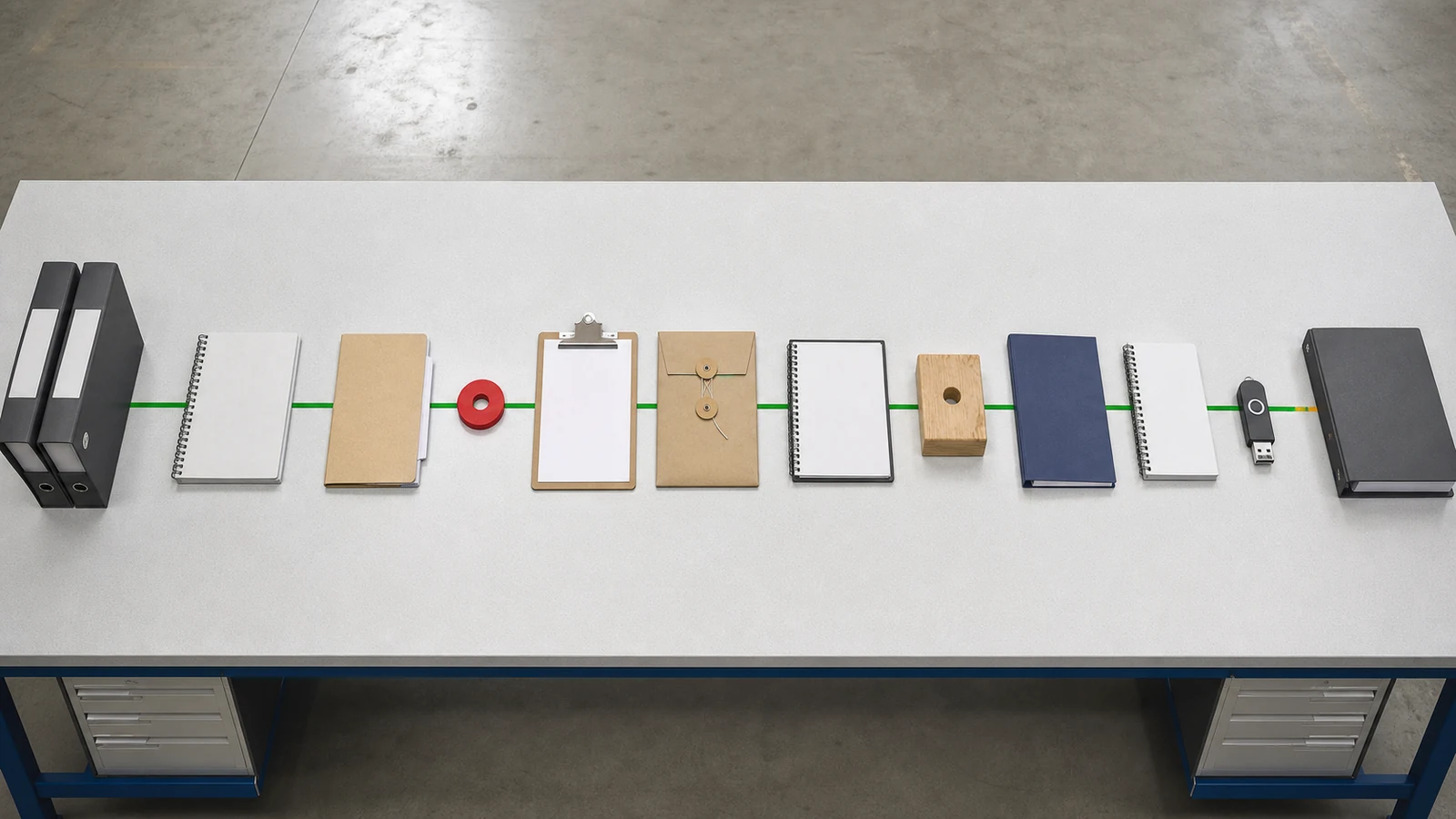
File delivery is also controlled. Define folder structure, filenames, native and PDF formats, revision status, transfer channel, checksum or package confirmation where required, and the person who acknowledges receipt. A complete local folder is not a completed handover until the agreed recipient can identify the final set.
At release, reconcile the document register against three separate views: the issued file set, the signed transmittal, and references printed or attached to the physical packages. Each required row should show the final revision, release status, actual filename, issue date, and receipt state.
Superseded files should be segregated so that a buyer cannot mistake them for the release revision. Then compare package IDs, serial references, quantities, dimensions, weights, accessory allocations, and deviation numbers across the packing list, weight record, photo register, loading plan, and release note. Record any mismatch as an open handover item with an owner and disposition. This reconciliation makes document completeness testable; a directory containing many files is not evidence that the correct revisions describe the shipped packages.
The switchgear inspection and test plan guide provides the hold and witness framework. This article applies it only to final packing, loading, and shipment records; it does not redesign general FAT coverage.
Use this release checklist:
| Check | Required input | Returned record | Hold condition |
|---|---|---|---|
| Revision match | Approved equipment and packing revisions | Signed revision check | Drawing mismatch |
| Dimensions and weight | Frozen equipment and crate data | Measured dimensions, net/gross weights | Data is missing or inconsistent |
| Preservation | Route, storage, barrier and desiccant basis | Sealing, desiccant, humidity, photo records | Declared period is unsupported |
| Contents | Package schedule and allocation | Itemized packing list and photos | Package count or loose parts differ |
| Handling | Lifting, forklift, center of gravity, stacking | Applied marks and handling drawing | Safe interface is undefined |
| Raw wood | Material determination | Treatment-mark photos where applicable | In-scope evidence is absent |
| Loading | Approved container plan | Blocking, lashing, and loading record | Load arrangement is uncontrolled |
| Handover | Document register | Complete transmittal and receipt | File or acknowledgement is missing |
| Release | Closed hold points and deviations | Signed release note | Signature or closure is absent |
Compare the physical package, applied marks, packing list, photo register, loading record, and document register as one evidence set. Release only after their identifiers, counts, revisions, and totals agree.
Representative engineering review, entirely synthetic, illustrative, and non-universal. This is not a XIYA POWER customer, supplier, factory, quotation, order, design, packing, inspection, test, shipment, delivery, commissioning, maintenance, damage, or field case. No compliance, acceptance, safety, preservation, delivery, or result is claimed.
Synthetic project inputs: Four 24 kV metal-clad switchgear panels are each 900 mm wide, 1,800 mm deep, 2,300 mm high, and 850 kg net. One accessory package is 280 kg net, and one spare-parts package is 120 kg net. The plan is six packages totaling 3,800 kg net.
The sea route is 42 days plus up to 14 days of covered destination storage. The buyer packing specification requires a sealed barrier, calculated desiccant, humidity indication, shock and tilt indicators, individual IDs, and treated raw-wood bases where raw wood is used. The approved general arrangement is revision C. The required panel-crate internal height is 2.4 m.
Synthetic candidate response: The preliminary packing list shows five packages and 3,680 kg net. It combines accessories and spares without a controlled contents list. The packing drawing is revision B, and one crate has 2.32 m internal height.
Panel crates use PE film, but no sealed-barrier specification, desiccant calculation, humidity indicator, or preservation period is returned. Two raw-wood skid bases lack treatment-mark evidence in the photo register. Gross weights, centers of gravity, lift points, forklift entries, stacking limits, and container blocking are absent.
The inspection and test plan makes final packing a hold point, but its release signature is blank. Four routine test records exist. The document register omits the packing drawing, preservation record, photo register, deviation closure, and release note.
All values, deficiencies, and hold states in the following table are synthetic.
| Synthetic hold gate | Open decision | Primary missing evidence | State |
|---|---|---|---|
| 1 | Packing design, revision, transport state, support, dimensions | Revision C packing drawing, 2.4 m height, transport-state record | Hold |
| 2 | Preservation, raw wood, crate handling, container interface | Barrier basis, desiccant, marks, gross weights, handling and loading plan | Hold |
| 3 | Six-package identity, contents, serial traceability, weights, marks | Sixth package, 120 kg reconciliation, contents and package records | Hold |
| 4 | Final inspection, document register, deviations, release, handover | Signed hold point, missing files, closure, release note, receipt | Hold |
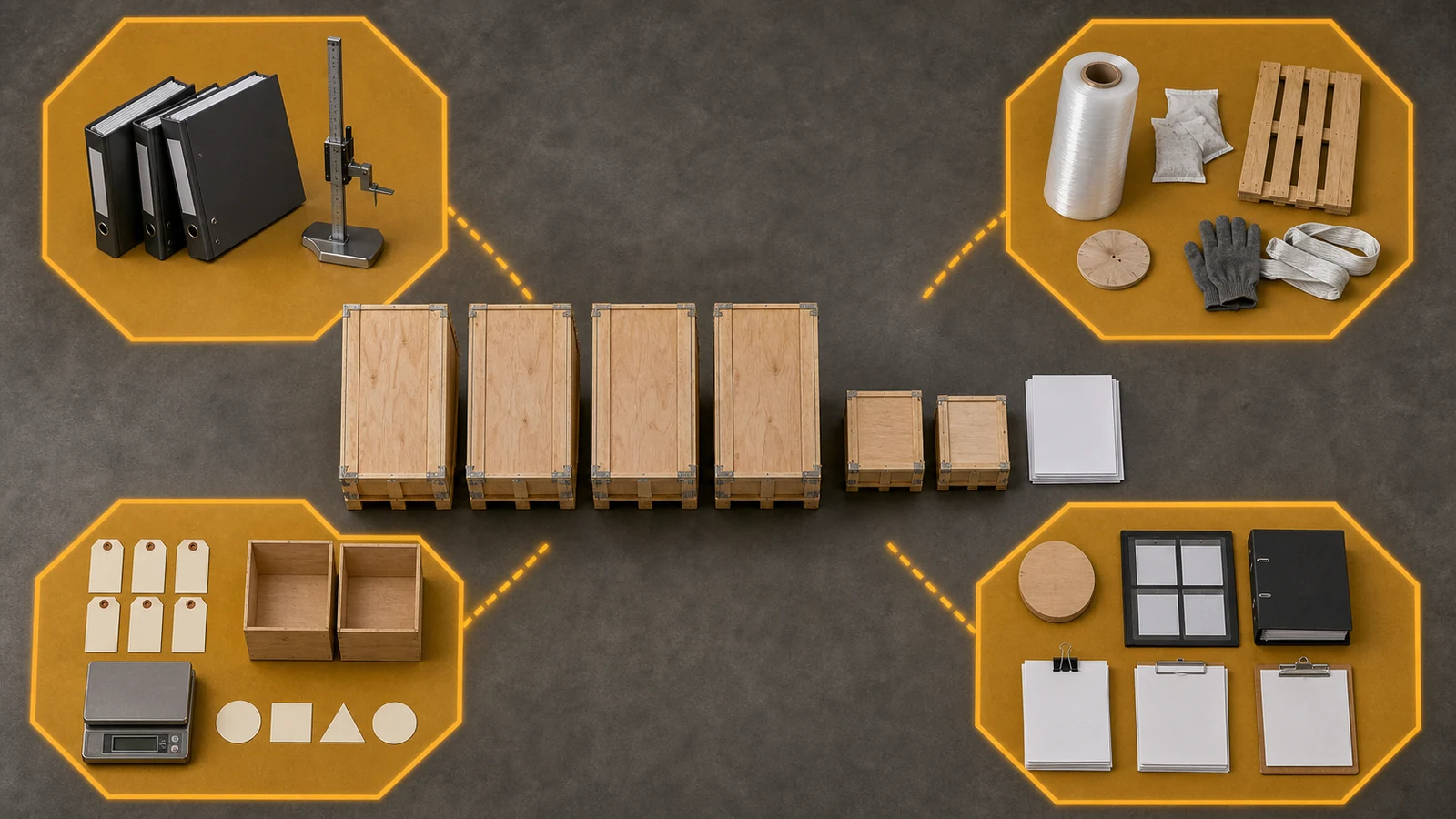
No package is released, shipment-ready, delivered, or proven. Close all four gates with controlled evidence before shipment release.
Freeze the equipment and packing revisions, transport state, preservation period, package design, contents allocation, handling data, inspection plan, required documents, destination, and release owners.
Include package ID, equipment or serial reference, dimensions, net and gross weight, contents, accessory and spare allocation, marks, and links to the photo and loading records.
No. It addresses phytosanitary risk for in-scope raw-wood packaging material. It does not approve structural strength, lifting, moisture protection, weight, or shipment release.
List approved drawings, test-record index, inspection release, packing list, preservation and weight records, photos, applicable certificates, deviations, loading record, release note, and transmittal.
Assign them to a package ID and controlled contents list. Record quantities, part references, weights where needed, photographs, and the matching packing-list entry.
Hold release when revisions, preservation, dimensions, package counts, weights, contents, handling data, raw-wood evidence, inspection signatures, deviations, documents, or receipt confirmation remains missing or inconsistent.