Quotation form
Send an inquiry
Start with the basics. Our team can follow up for missing drawings, standards or packing details.
Submitted details are used only for quotation, technical review and project communication.

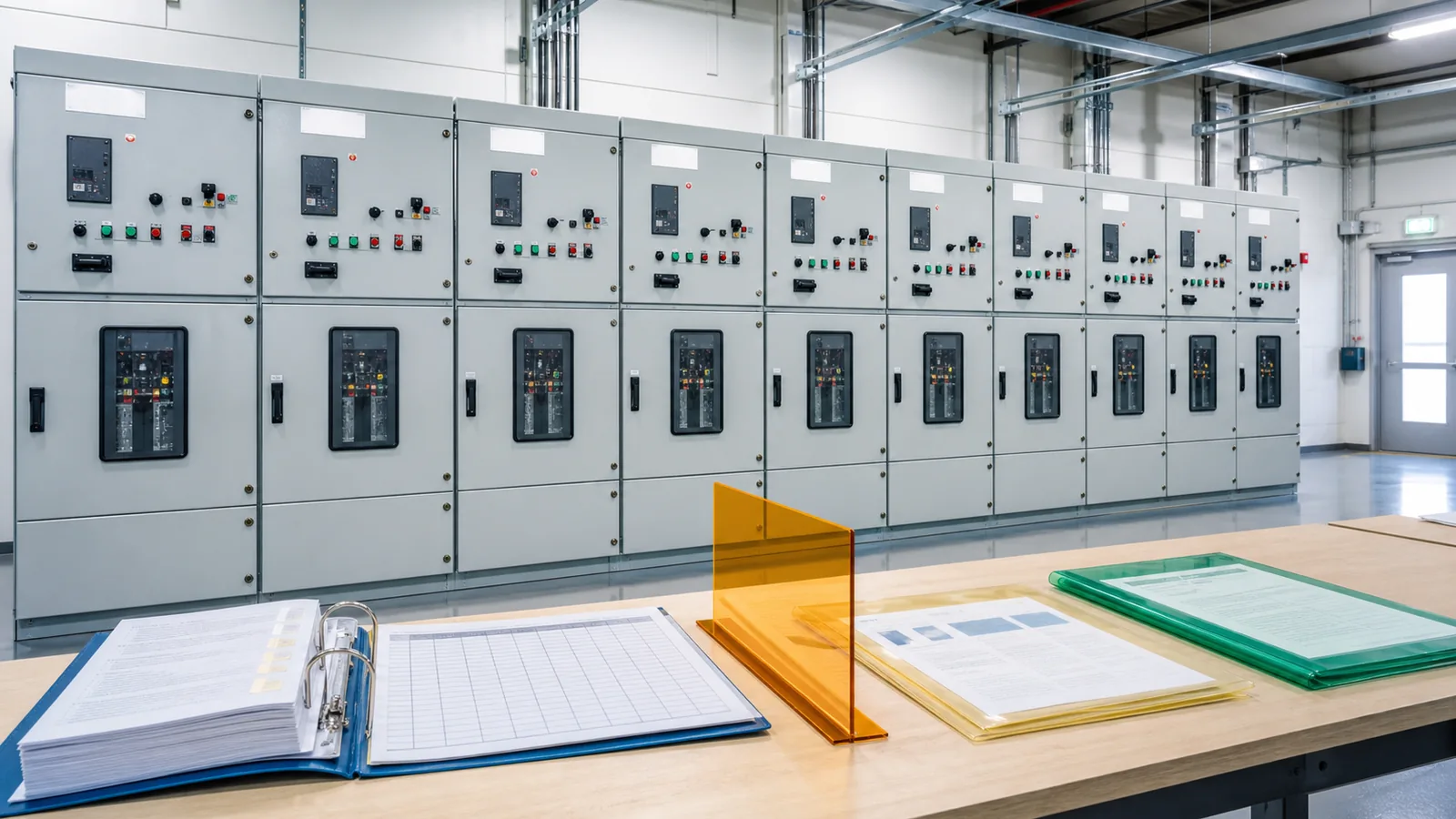
A switchgear compliance deviation matrix should turn the specification, schedules, drawings, and supplier proposal into one controlled pre-purchase-order decision record. Use one requirement per row, identify the offered configuration, link the response to applicable evidence, classify exceptions, and record who can accept them. A blanket Comply statement or an exception left inside quotation text is not a closed technical basis.
Start by freezing the exact source set being evaluated. Record the RFQ or project reference, specification title and revision, addenda and clarifications, equipment schedule, applicable drawings, supplier proposal revision, response date, and scope boundary. The live XIYA POWER OEM/ODM process likewise starts with product data, ratings, drawings or samples, standards, documents, and release inputs. The matrix gives those inputs a traceable decision path.
Responsibility must also be explicit. The OEM-versus-ODM responsibility basis helps identify who defines, proposes, reviews, approves, and records each requirement, but the project contract remains controlling.
Use a compact row structure:
| Source/clause | Requirement | Offered response | Status | Evidence | Impact/owner | Buyer disposition | Closure/order destination |
|---|---|---|---|---|---|---|---|
One row should express one decision. Record the source clause, concise requirement, proposed configuration, applicable evidence, reviewer, due or closure status, and where the accepted result will appear in the order documents. If a source document changes, revise the matrix and identify which rows require review.
Before evaluation starts, issue a short baseline record that lists every included source and explicitly notes missing or excluded documents. Later clarifications should identify the rows they affect rather than silently replacing the original wording. Preserve the superseded source and matrix revision so reviewers can reconstruct why a status changed. This avoids comparing one supplier response against an old schedule while another response is judged against a later addendum.
The compliance matrix is a pre-PO stage gate. The gate owner cannot release it while requirements are unclassified or exceptions lack an owner and disposition. A Deviation or Excluded/Open row without an accepted path is a hold condition. Matrix size, status codes, deadlines, and approval authority are project-defined rather than universal.
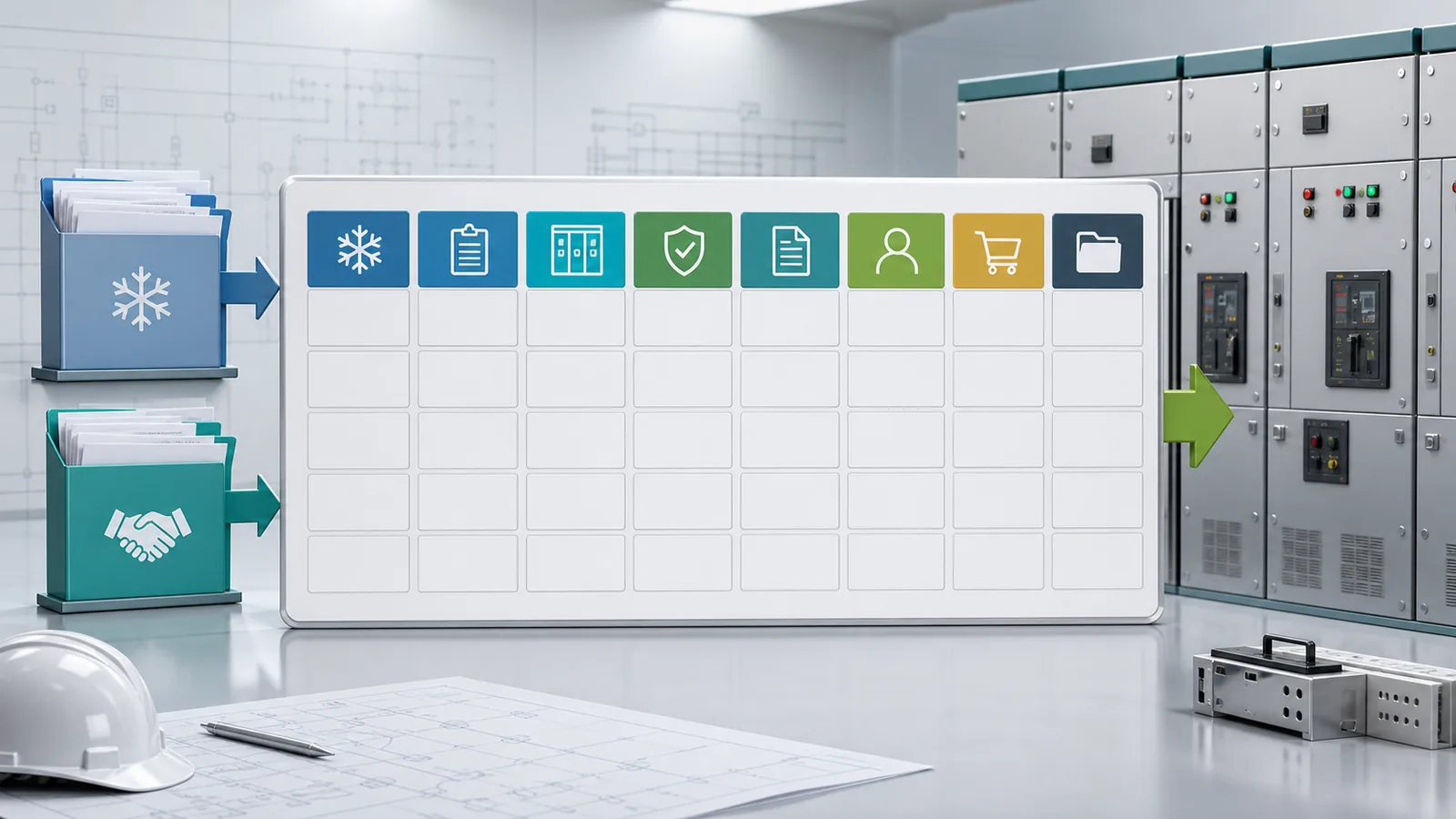
Use status classes that expose rather than soften differences. The following four are a practical project example, not mandatory codes:
| Status | Meaning | Minimum record | Release treatment |
|---|---|---|---|
Comply |
Offer matches the requirement | Response plus evidence appropriate to the requirement | Close after review |
Comply with clarification |
Wording or procedure is clarified without changing the offer | Agreed clarification and reference | Close only after acceptance |
Deviation |
Offered configuration differs from the requirement | Difference, evidence, impacts, owner, disposition | Hold until disposition |
Excluded/Open |
Not addressed, excluded, or not yet confirmable | Scope statement, action, owner, deadline | Hold or carry explicitly with authority |
Comply with clarification must not hide a material difference. A different control voltage, cable interface, rating, construction, or evidence basis is a deviation even if the supplier describes it as clarification. Silence, a blank response, or a generic catalogue statement is not compliance.
The matrix supports configuration status; it does not prove electrical performance or certification. The official ISO 10007:2017 page says the standard provides configuration-management guidance for products and services from concept to disposal. It lists the 2017 edition as current after confirmation in 2023 while noting revision work. This supports disciplined configuration identification, not a switchgear product requirement or certification claim.
The accepted matrix becomes an input to the high-voltage equipment manufacturing workflow. Pre-PO exception closure prevents an unresolved bid difference from becoming an uncontrolled production assumption.
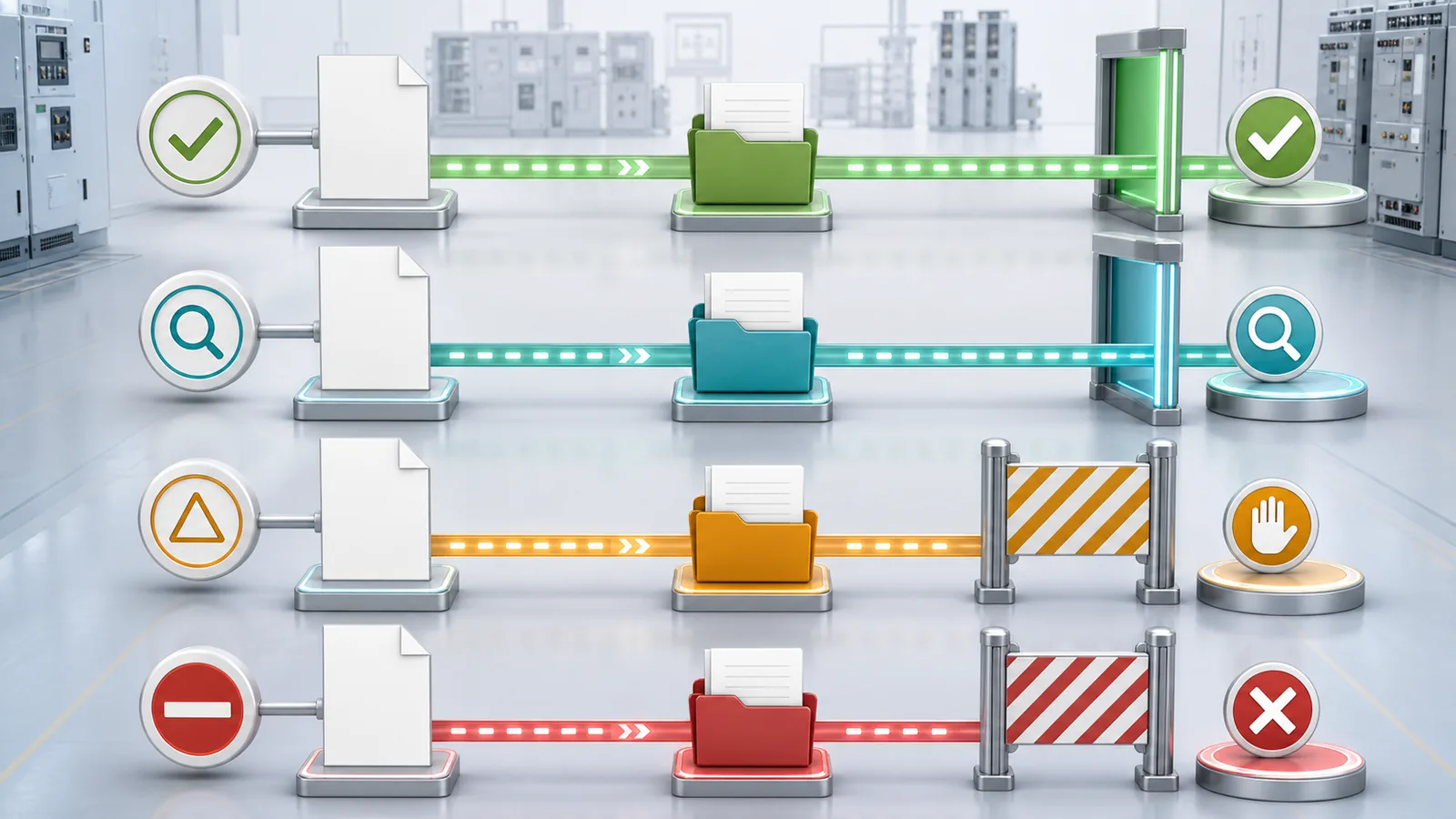
Separate four questions: what did the supplier claim, what evidence supports it, does that evidence apply to the offered configuration, and who accepted it? A document title alone does not answer all four.
Depending on the requirement, evidence may include a controlled datasheet or drawing revision, test or certificate identity, applicability statement, calculation, material declaration, routine-test plan reference, sample requirement, or signed clarification. Evidence depth should match the requirement and project risk; not every row needs the same document type.
The accepted row should also point forward to the controlled manufacturing input where the decision will be used. Depending on scope, that may be an approved drawing, revision register, manufacturer data sheet, inspection and test plan, or sample approval record. These records are not automatically required for every row, but the matrix should name the applicable destination and owner. A deviation affecting control voltage may flow to schematics, device schedules, and the approved drawing; an evidence-only clarification may close in the matrix without changing physical configuration.
Common gaps include a brochure covering a model family rather than the offered item, a certificate for another rating or construction, an unmarked drawing, or an internal-arc record with no applicability comparison. For evidence-dependent rows, record the exact reference, revision, covered characteristic, applicability note, owner, missing-information action, and closure reference.
The buyer still decides whether the evidence is adequate. Document review makes the decision traceable; it does not independently demonstrate how the equipment will perform in service.
Every Deviation and Excluded/Open row needs an impact review. The supplier explains the proposed difference; the buyer evaluates what it means for the project.
| Review path | Questions to resolve | Decision owner/evidence |
|---|---|---|
| Electrical and protection | Rating, duty, coordination, control supply, interlocks | Responsible engineer and technical basis |
| Physical and civil interface | Dimensions, cable entry, bus or terminal position, room interface | Layout/civil owner and approved interface |
| Environment and evidence | Service conditions, enclosure, corrosion, test applicability | Technical authority and applicable record |
| Commercial and schedule | Price, lead time, warranty, downstream approvals | Commercial/schedule owner and accepted effect |
| Documents and release | Which schedules, drawings, and order attachments change? | Document owner and closure reference |
Use a controlled disposition: accept as offered, accept subject to an identified condition, revise the proposal, reject, or remain open. Remain open is not passive; it needs an owner, deadline, release rule, and explicit authority if carried into the order.
Accepted technical differences must enter the controlled engineering basis. The switchgear drawing revision control guide covers how an accepted decision enters drawing and release records; this matrix identifies the decision and its required destination without repeating that workflow.

The release package should identify exactly what was accepted. Include:
Before release, confirm that every row is classified; clarifications are recorded; deviations have technical and commercial/schedule impacts; excluded or open items are closed or explicitly carried; referenced evidence is available; superseded matrix and proposal revisions are identified; and the gate owner has authorized the package.
An accepted exception should appear in a named purchase-order attachment, technical schedule, or approved-deviation list. Email can transmit a decision, but it should not remain the only record. Conditions must state what is required, who closes them, when they become a hold, and which downstream document proves closure.
At order handover, issue a release note or equivalent record that identifies the accepted matrix and proposal revisions. The document register should show which approved drawing, schedule, inspection and test plan, or later test record inherits each applicable condition. Packing list and shipment records are not pre-PO evidence, but if an accepted exception changes identification or supplied scope, the order handover should flag that downstream dependency. This creates traceability from specification clause to disposition, controlled input, release state, and final evidence without pretending those later records already exist.
This is a pre-PO process. A later substitution, non-conformance, concession, rework, or retest requires the applicable post-order change-control procedure; the original matrix is not permission to bypass it.

Illustrative engineering review, not a XIYA POWER customer project, tender, factory case, field record, commissioned installation, export record, or service result.
This representative engineering review is synthetic. Its values are retained to show how a matrix decision works, not to imply customer experience or a completed result.
The synthetic buyer basis is an 18-panel, 12 kV metal-clad switchgear lineup with a 1,250 A main bus, 25 kA for 3 s short-time rating, 110 V DC control supply, and bottom cable entry. Its 72-row matrix contains 45 Comply, 13 Comply with clarification, 9 Deviation, and 5 Excluded/Open entries.
Three exceptions are release-critical:
The remaining six deviation rows and four excluded/open rows need the same controls. That produces 14 exception rows in total, not an automatic rejection and not a supplier score. Each requires an owner, configuration-applicable evidence, technical and commercial/schedule impact, buyer disposition, and an identified destination in the accepted order documents.
Decision: hold purchase-order release. Release can proceed only after all 14 exceptions are closed or explicitly carried under approved conditions. This illustrative decision does not claim an actual approval, test, production, delivery, cost, or project outcome.
For a controlled review, send the specification and addenda, equipment schedule, applicable drawings, supplier proposal revision, clause response, evidence index, deviation list, and required release date through the XIYA POWER technical contact page.
Use one row per requirement with the source clause, requirement, offered response, status, evidence reference, applicable impacts, responsible owner, buyer disposition, closure record, and destination in the accepted order documents. Adapt fields and authority to the project.
A clarification resolves wording, units, or procedure without changing the offered configuration. A deviation changes the stated technical, interface, evidence, commercial, or approval basis. A material difference should not be labeled as clarification.
No. It is a claim that must be reviewed against the offered configuration and the evidence appropriate to the requirement. A signed schedule or catalogue statement alone may not establish applicability.
The project-defined authority with responsibility for the affected technical requirement must approve it, together with the appropriate commercial or schedule authority where impacts exist. Utility, owner, consultant, or third-party approval may also be required by the contract.
Identify each accepted deviation and condition in a controlled attachment such as the approved matrix revision, deviation list, or accepted technical schedule. State the agreed configuration, evidence basis, conditions, impacts, and downstream document destination.
Treat it under the applicable post-order change process, which may require a change request, non-conformance record, concession, contract amendment, rework, or retest. Do not retroactively use the pre-PO matrix as approval.